Artificial intelligence can significantly improve diagnoses and ease the workload of healthcare professionals. However, there is often still a long way to go before it becomes a routine part of clinical practice. This was the broad consensus among experts at the 9th Research Summit of the University for Continuing Education Krems. Under the title “Digitalization, Artificial Intelligence and Health,” researchers from Austria and Germany discussed how the benefits and safety of digital health technologies can be assessed. The evening was organized by the Faculty of Health and Medicine.
“Digital technologies and artificial intelligence are opening up new possibilities in prevention, diagnosis, treatment, and healthcare,” said Univ.-Prof. Dr. Viktoria Weber, Rector of the University for Continuing Education Krems, in her welcoming remarks. At the same time, they raise fundamental questions: how can quality and transparency be ensured, how can new inequalities be avoided, and how can trust in technological innovations be built? “Especially in a field characterized by rapid change and high complexity, facts and robust evidence are indispensable.”
The Faculty of Health and Medicine is currently integrating artificial intelligence into nine research projects. These range from medical decision support and health data analysis to health services research and new teaching and learning concepts. A professorship in Artificial Intelligence and Health Services, funded by the Province of Lower Austria, was also recently filled. “Artificial intelligence is an evolutionary development on the one hand, but also a highly disruptive one,” said Univ.-Prof. Dr. Stefan Nehrer, Dean of the Faculty. “We are therefore looking closely at what skills will be needed in the future to shape this development responsibly.”
Between breakthrough and responsibility
In his keynote, “Harnessing Intelligence for Healthcare,” Univ.-Prof. Dr. Günter Klambauer, Deputy Head of the Clinical Research Institute for Medical Artificial Intelligence at Johannes Kepler University Linz, traced the development of AI from the early days of AI research to today’s AI agents, which can execute commands autonomously and thus raise new safety concerns. For medicine, he said, the way data are handled is particularly important, for example through open models that run on hospitals’ own computers. Despite all the risks, Klambauer took a positive view: “Especially in healthcare, the opportunities are far greater than the risks because we still have a human doctor working with these models.” Europe also has a strong legal framework in place, with the AI Act and the General Data Protection Regulation.
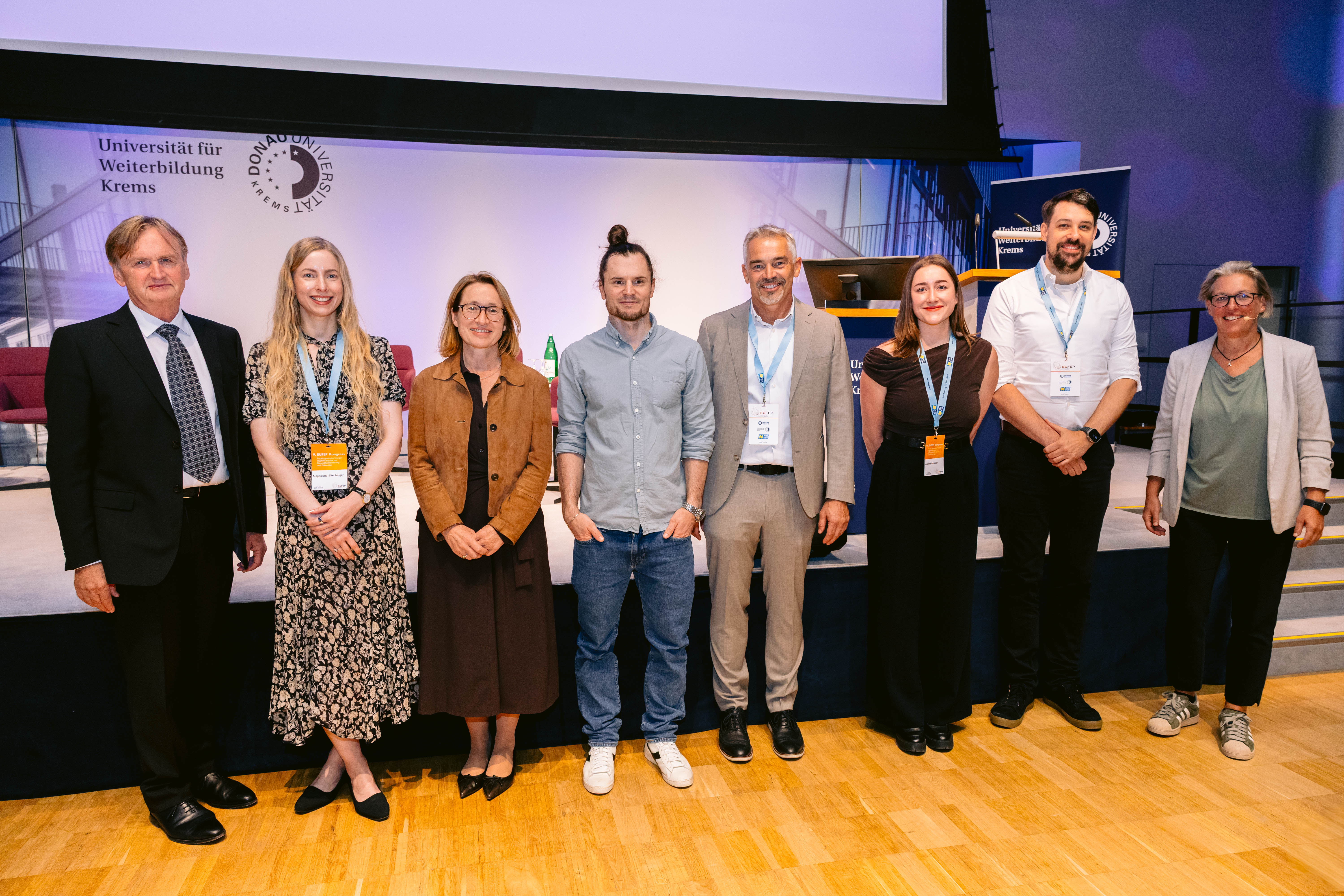
Group photo from the Research Summit 2026 (from left to right): Prof. Stefan Nehrer, Ph.D. (UWK), Magdalena Eitenberger, M.A., Ph.D. (University of Vienna and Ludwig Boltzmann Institute for Digital Health and Patient Safety), Prof. Viktoria Weber, Ph.D. (Rector of UWK), Prof. Günter Klambauer, Ph.D. (Johannes Kepler University Linz), Prof. Gerald Gartlehner, Ph.D. (UWK), Arianna Gadinger, Ph.D. (UWK), Prof. Sebastian Merkel, Ph.D. (Ruhr University Bochum), Brigitte Piso, Ph.D. (UWK).
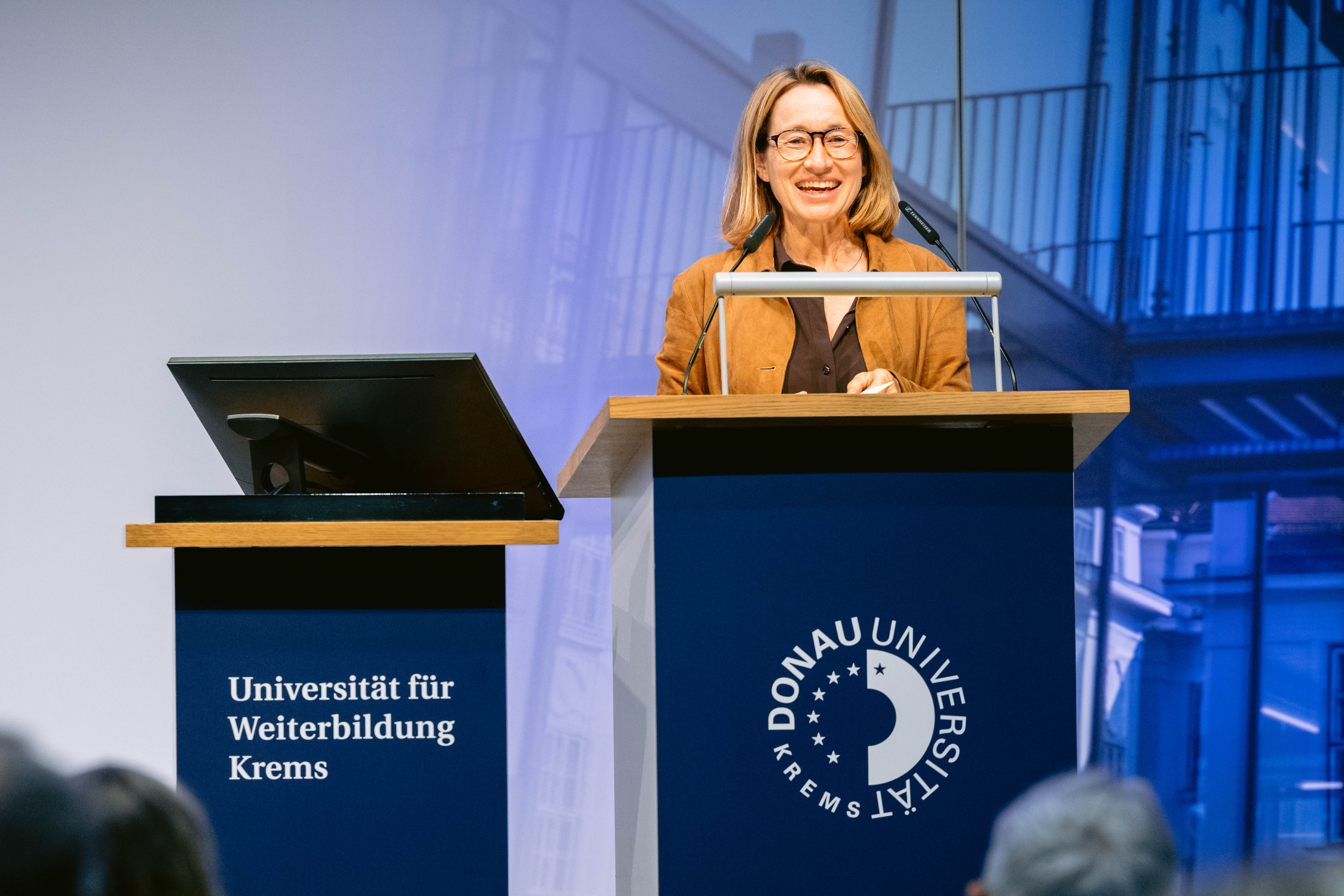
Prof. Dr. Viktoria Weber, Rector of the University for Continuing Education Krems, welcomed the guests to the 9th Research Summit on “Digitalization, Artificial Intelligence, and Health.”
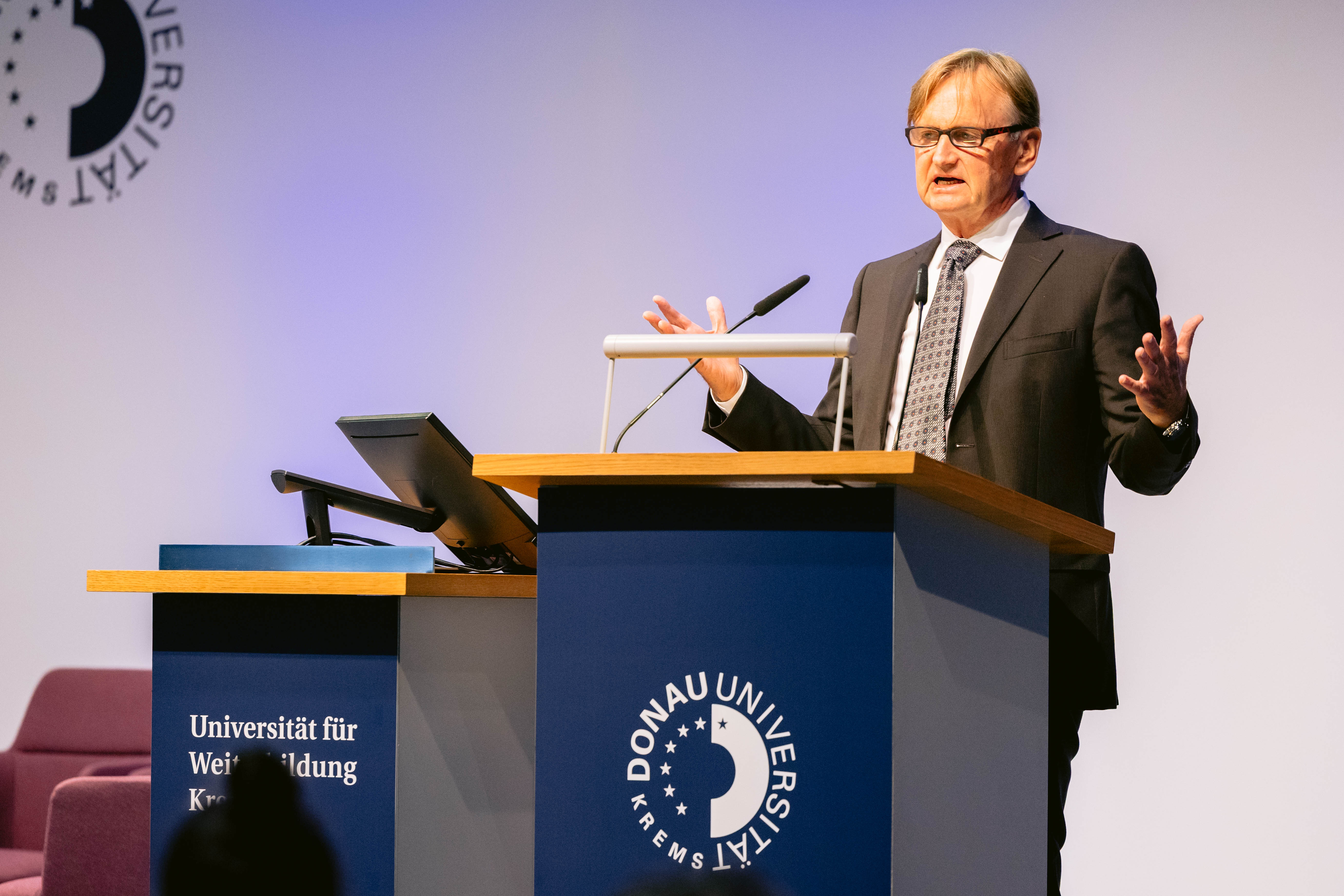
Prof. Dr. Stefan Nehrer, Ph.D., Dean of the Faculty of Health and Medicine at the University of Continuing Education Krems, opened the 9th Research Summit together with the Rector.
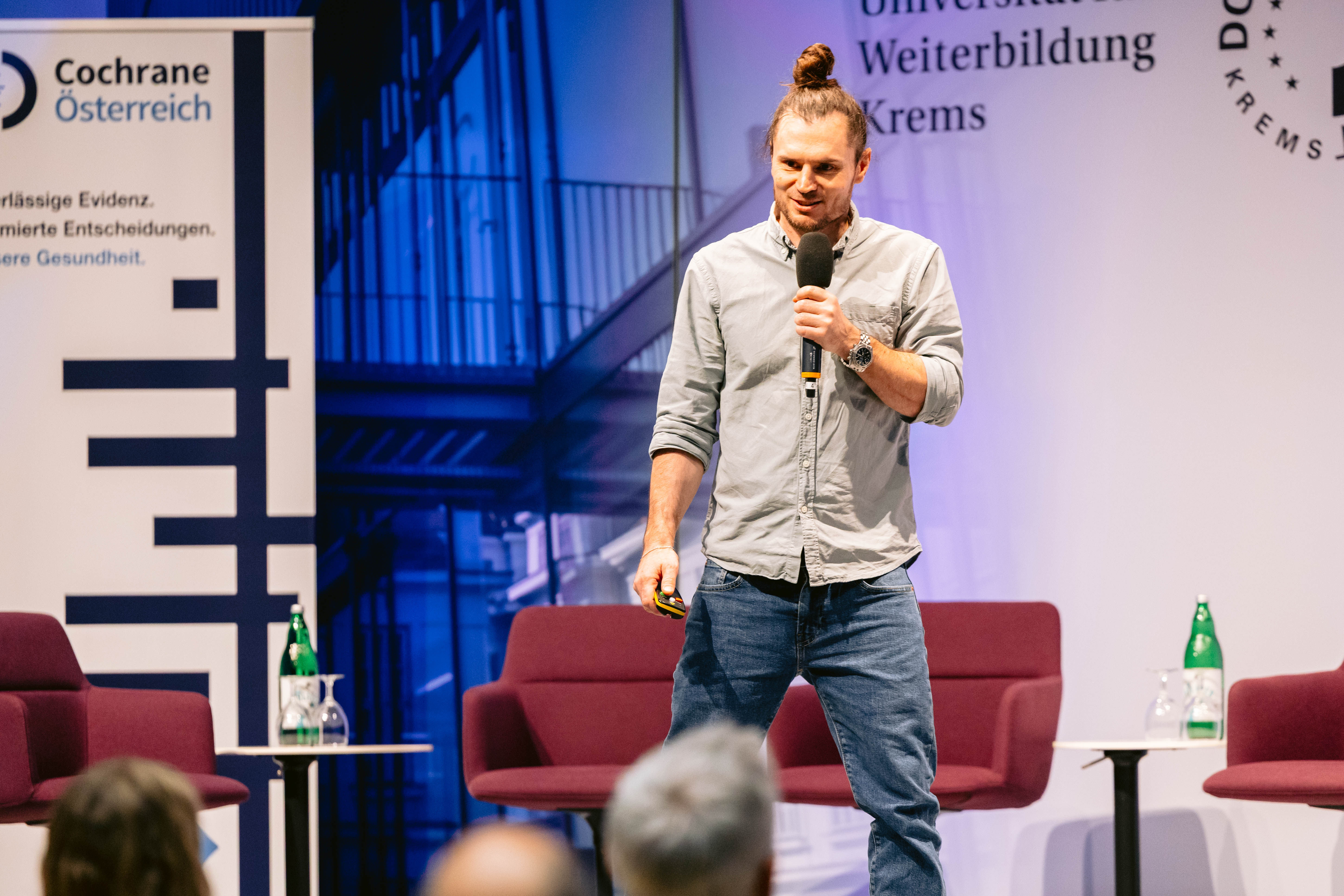
Prof. Dr. Günter Klambauer, deputy director of the Clinical Research Institute for Medical Artificial Intelligence at Johannes Kepler University Linz, delivered the keynote address at the 9th Research Summit.
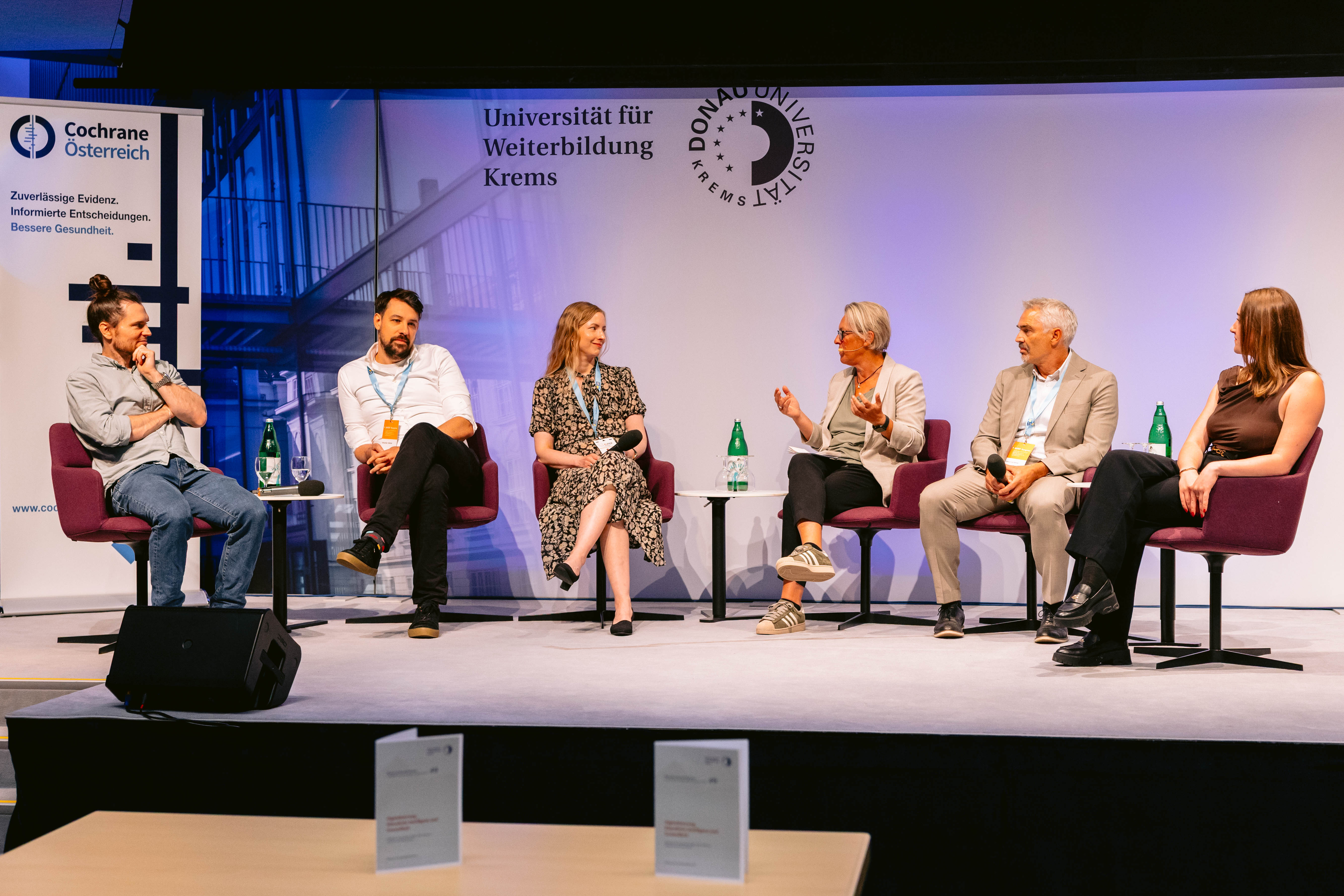
The panel discussion at the 9th Research Summit focused on why AI often works well in medicine but is slow to be adopted in everyday clinical practice, and what standards must be in place for this to happen.
Dr. Arianna Gadinger, a PhD student at the Department for Evidence-based Medicine and Evaluation at the University for Continuing Education Krems, is investigating how well AI can take over parts of the evidence synthesis process, i.e. the systematic summarization of studies. Her findings show that AI is useful for structured tasks, but humans remain indispensable when it comes to nuanced interpretation. Gadinger called on researchers to disclose their use of AI and to report what did not work.
Good technology alone is not enough
In the subsequent panel discussion, Univ.-Prof. Dr. Gerald Gartlehner, Head of the Department for Evidence-based Medicine and Evaluation, expressed optimism. Precisely because there are problem areas in medicine, ranging from diagnostic errors to communication with patients, he sees great potential in AI. At the same time, he cautioned: “The standards we have in medicine must also apply to AI.”
Klambauer illustrated why good technology alone is not enough with a study from China. An AI system for diagnosing eye diseases achieved very high accuracy rates, but was largely unused in clinical practice until the number of clicks required to operate it was reduced from five to three. Prof. Dr. Sebastian Merkel from Ruhr University Bochum has seen something similar in nursing, where a technically sophisticated documentation system is not being used in many places. Dr. Magdalena Eitenberger from the University of Vienna and the Ludwig Boltzmann Institute for Digital Health and Patient Safety pointed out that documentation is still done manually in many hospitals. Some ways of reducing the burden do not require AI at all, she added – for example, fostering greater openness about errors.
The closing discussion on how the success of new technologies might be measured ten years from now highlighted just how different expectations are. Klambauer considers it quite conceivable that AI-supported, personalized therapies could significantly reduce cancer mortality. Gartlehner hopes for preventive care that is more closely tailored to individual risk, while Merkel hopes for fewer duplicate examinations and overcrowded waiting rooms. Eitenberger raised the question of who benefits from these developments. For her, success would mean “if currently underserved population groups became healthier, rather than people who are already very healthy becoming even healthier.”
Contact


Tags

