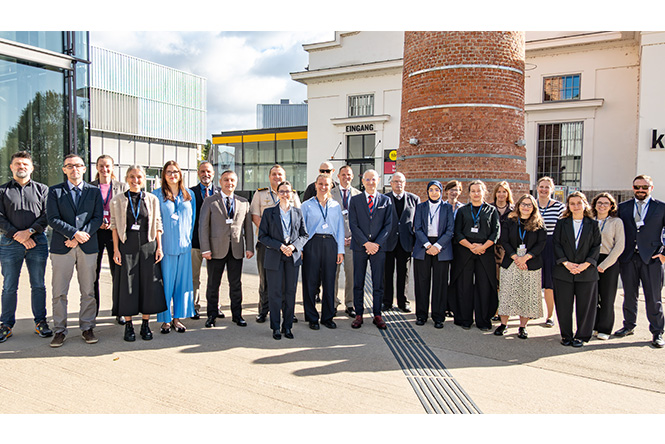
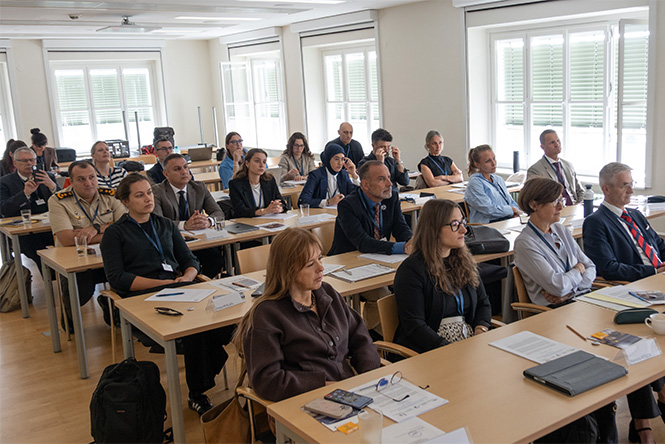
21 professionals from nine European countries and beyond gathered at the University for Continuing Education Krems at the end of September to address current challenges in cultural heritage protection as part of the Cultural Heritage Protection Course 2026. The programme focused on the role of cultural heritage in crisis and conflict situations, as well as on how cultural heritage protection can be effectively integrated into existing security and disaster management structures.
With the Cultural Heritage Protection Course 2026, the Center for Cultural Property Protection at the University for Continuing Education Krems once again organized an international professional training programme for experts working in the field of cultural heritage protection. The course was held under the auspices of the European Security and Defence College (ESDC) and implemented in cooperation with the Centre for International Stabilisation Measures, Verification and Arms Control and the Office of Cultural Affairs of the Principality of Liechtenstein.
Professionals from the fields of cultural heritage, the military, police, emergency management, international organisations and academia came together to discuss current developments, emerging challenges and possible solutions in the field of international cultural heritage protection, while strengthening cross-sectoral cooperation and fostering sustainable partnerships.
Cultural Heritage Protection as Part of Crisis Management
Cultural heritage around the world is increasingly threatened by natural disasters, armed conflicts and other crisis situations. Its protection therefore requires an integrated approach that recognizes cultural heritage both as a valuable resource worthy of safeguarding and as an integral component of comprehensive crisis and security strategies.
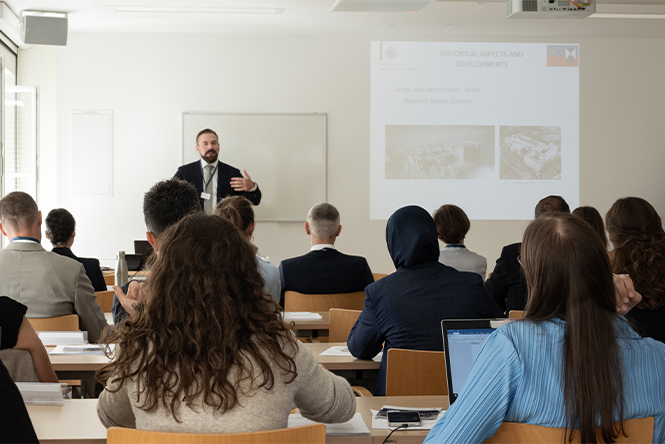
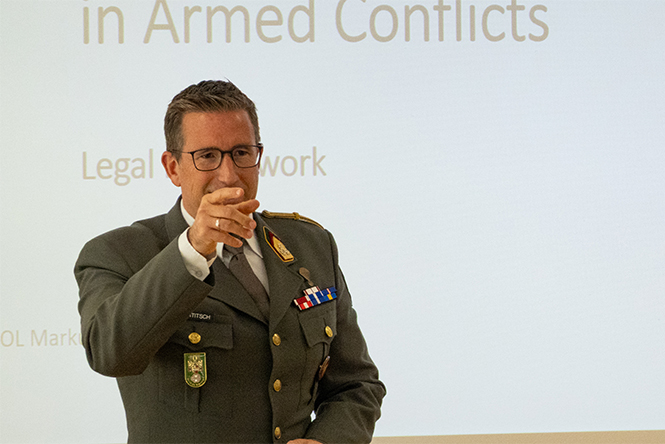
Throughout the course week, international experts explored various aspects of cultural heritage protection. The programme covered, among other topics, legal frameworks for cultural property protection, NATO and OSCE perspectives, Human Security, cultural heritage monitoring, the protection of cultural property in armed conflict, international missions, and cultural and military diplomacy. In addition, opportunities for cooperation with the European Civil Protection Mechanism were presented and discussed.
The course highlighted that cultural heritage protection cannot be considered in isolation. Effective safeguarding of cultural heritage requires that appropriate measures be integrated at an early stage into existing crisis and disaster management structures and that stakeholders from different professional fields work closely together.
Practical Training Through a Crisis Scenario
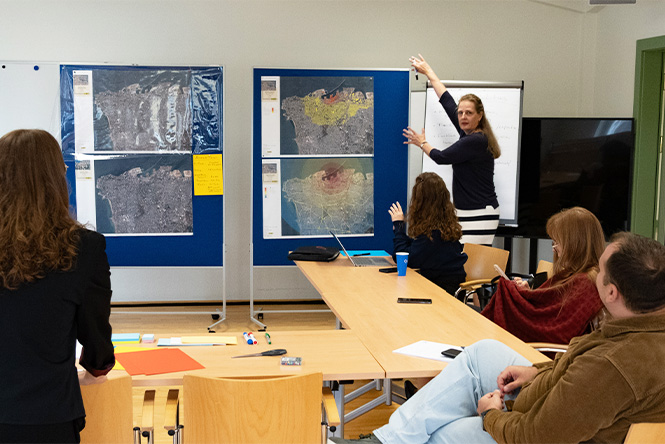
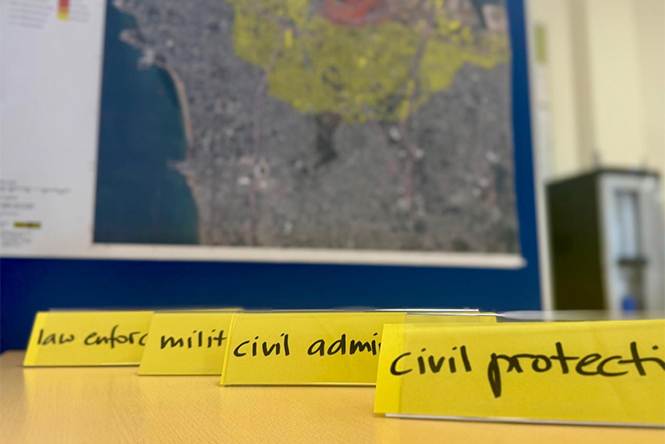
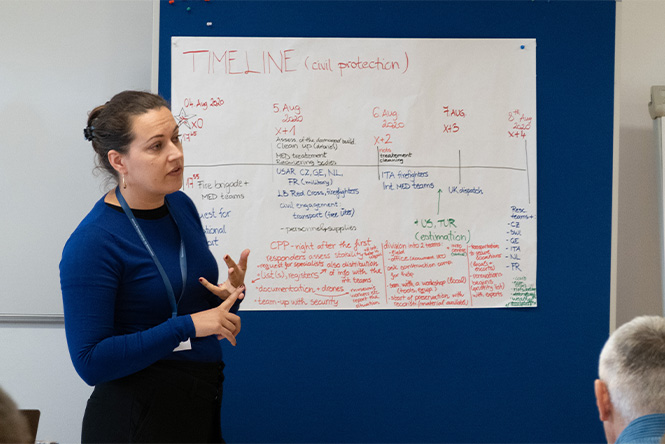
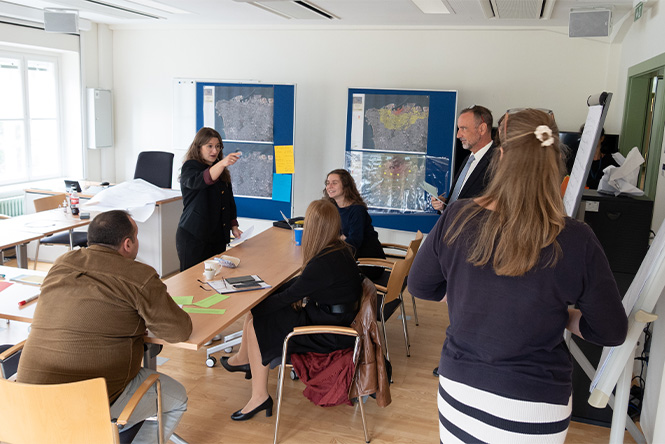
A key component of the programme was a practical crisis exercise, which enabled participants to apply the knowledge acquired during the course week in a realistic scenario. Participants were tasked with planning protective measures for endangered cultural assets, evaluating different courses of action, and making decisions under complex conditions. At the same time, they worked together to develop strategies for aligning the protection of cultural heritage in crisis situations with the requirements of disaster and security management.
The exercise demonstrated the importance of close coordination between cultural heritage institutions, security authorities, emergency response organisations and other relevant stakeholders for effective cultural heritage protection. Different responsibilities, priorities and decision-making processes must be coordinated in order to identify risks at an early stage and implement appropriate protective measures. Through this hands-on collaboration, participants gained valuable insights into the challenges of interdisciplinary crisis management and the importance of shared decision-making and communication structures for safeguarding cultural heritage in times of crisis and conflict.
International Networking as a Key Asset
In addition to expert lectures and practical exercises, the Cultural Heritage Protection Course provided numerous opportunities for professional exchange and cross-institutional cooperation. Participants contributed diverse institutional and professional perspectives as well as experiences from different national contexts, discussing shared challenges and future-oriented approaches drawn from practice.
The contacts and partnerships strengthened during the course contribute to the international network of cultural heritage protection professionals and provide an important foundation for future cooperation in addressing common challenges. In this way, the Cultural Heritage Protection Course makes an important contribution to the further development of professional structures and competencies for the protection of cultural heritage in crisis and conflict situations.




Queries



Tags

