
-

Graduation
Certificate of attendance
-

ECTS-Points
6
-

Learning format
-

Duration
5 days
-

On-Campus Teaching
Mo-Fr
-

Start
6 July 2026
-

Costs
EUR 0,-
-

Language
English
-


The Summer School – offered as a stackable Micro‑Credential Program (MCP) – focuses on developing innovative and sustainable cultural routes that make this hidden heritage visible and accessible through contemporary approaches. Participants connect Roman‑Germanic history with modern approaches to heritage interpretation, storytelling, and digital visualization, and analyze the tourism landscape of the cross‑border region of the Weinviertel (Lower Austria) and South Moravia (Czech Republic). In practice‑oriented working phases, realistic route concepts are developed that combine cultural relevance, sustainability, visitor guidance, and current tourism challenges, thereby contributing to regional development and sustainable cultural tourism.
The program is aimed at professionals and students in cultural and tourism management, regional development, heritage interpretation, archaeology, and conservation who seek to deepen their competencies in designing and communicating sustainable cultural routes.
The "Summer School 'Future Roman Trails', MCP" is offered once within the framework of the Interreg project "Roman Trails" and – combined with additional programs – can be credited toward the master’s degree "Cultural Property Protection, MSc (CE)".

Discover the little‑known Roman heritage north of the Danube and actively help shape the future of cultural tourism. Develop your ideas within an international project and gain valuable hands‑on experience in heritage management and tourism innovation.
Raffaela Woller, MA
Project Lead – Roman Trails

Any questions?
We’re here to help.

Assoz. Prof. Mag. Dr.
Anna Maria Kaiser
Study Program Director


Or contact us directly.
Benefit from our study program
- Analyse complex regional challenges and develop creative concepts for cultural tourism.
- Combine academic methods with digital innovation to design new forms of heritage interpretation.
- Work in an interdisciplinary setting and present your results to key decision‑makers.
-

practice-oriented
-

unique
-

interdisciplinary
Roman Trails
The project focuses on the creation of a common, cross-border thematic region of the areas of South Moravia and the northern part of Lower Austria (Weinviertel), based on the - little known - Roman history north of the Danube and the establishment of interactive (long-distance) hiking and cycling trails along the traces of the Roman history.
Curriculum
Course Content:
- Roman–Germanic history north of the Danube Limes
- Analysis of the tourism landscape in the Weinviertel and South Moravia
- Development of thematic “Roman Trails” (routes, content, infrastructure)
- Storytelling and innovative interpretation methods (including digital visualisations)
Teaching Approach:
Lectures and preparatory readings are combined with practice-oriented group work. Students develop concrete trail concepts and present their results to project partners and regional stakeholders.
Assessment:
Final presentation and submission of project documentation.
Schedule
The Summer School „Future Roman Trails" will take place once, as a one‑week block seminar from 6 to 10 July 2026.
In‑person sessions
| 06. – 09.07.2026 | On‑campus course days at the University for Continuing Education Krems (preliminary course times [tbc]: 09:00–18:00) |
| 10.07.2026 | Excursion day (preliminary course times [tbc]: 09:00–18:00) |
Travel to and from the venue is organised individually; public transport connections are available.
Downloads
Study Program Director


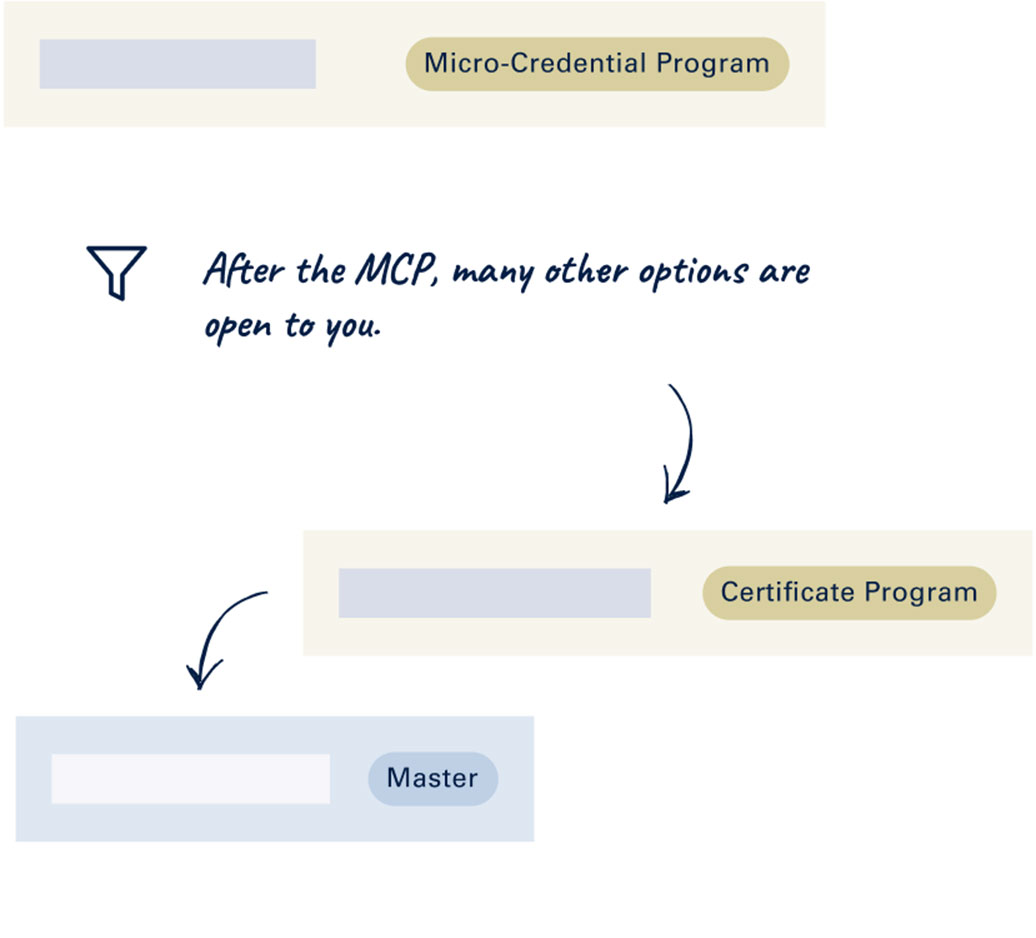
Stackable Program
In combination with other continuing education programs, Stackable Programs can be combined to achieve an academic degree.

The Stackable Program offers me complete flexibility in the design of my studies.
Tatjana Kohl
Student
Registration & Requirements for participation
Admission Requirements
- The Summer School is aimed at students, early‑career researchers, and professionals working in the fields of cultural heritage, tourism, cultural management, digital media, and sustainability, as well as anyone interested in deepening their understanding of regional and cross‑border cultural tourism development in connection with the interpretation of Roman heritage.
- Appropriate proficiency in English.
Registration process
- Click the “Register now” button and submit the fully completed registration form no later than 31 May 2026.
- After your binding online registration, you will receive an email confirming your place in the course.
Follow-up studies & programs
Tags

