The aim of expanding the long-standing connection between science and diplomacy toward culture was at the center of the conference “Science Diplomacy and Heritage: On the Politics of Fragments, the Role of Science, and the Perception of Lacunas,” which took place on December 4, 2025, at the Palazzo Grassi in Venice. The event was organized by the Science Diplomacy and Culture section, led by the University for Continuing Education Krems and EUTOPIA as part of the European Union Science Diplomacy Alliance. Around ninety senior representatives from diplomacy, international organizations, law, universities, and museums deepened existing relationships and developed new perspectives. The internationally sought-after artist Ali Cherri opened up new horizons with his performance “The Book of Mud.”
“Identifying interfaces, discussing approaches to cultural heritage from the triangular perspective of diplomacy, science, and culture, and highlighting the contribution of artistic practice to expanding our thinking about how we engage with culture were the goals of the conference,” explains Christina Hainzl, Head of the Research Lab Democracy and Society in Transition at the University for Continuing Education Krems, outlining the intention behind the event.
The conference marked the launch of a new conference series by the Science Diplomacy and Culture section under the umbrella of the European Union Science Diplomacy Alliance. By bringing together the three areas of diplomacy, science, and culture, the conference opened up new perspectives and addressed gaps and deficits in social and cultural narratives surrounding cultural heritage as a central topic of discussion.
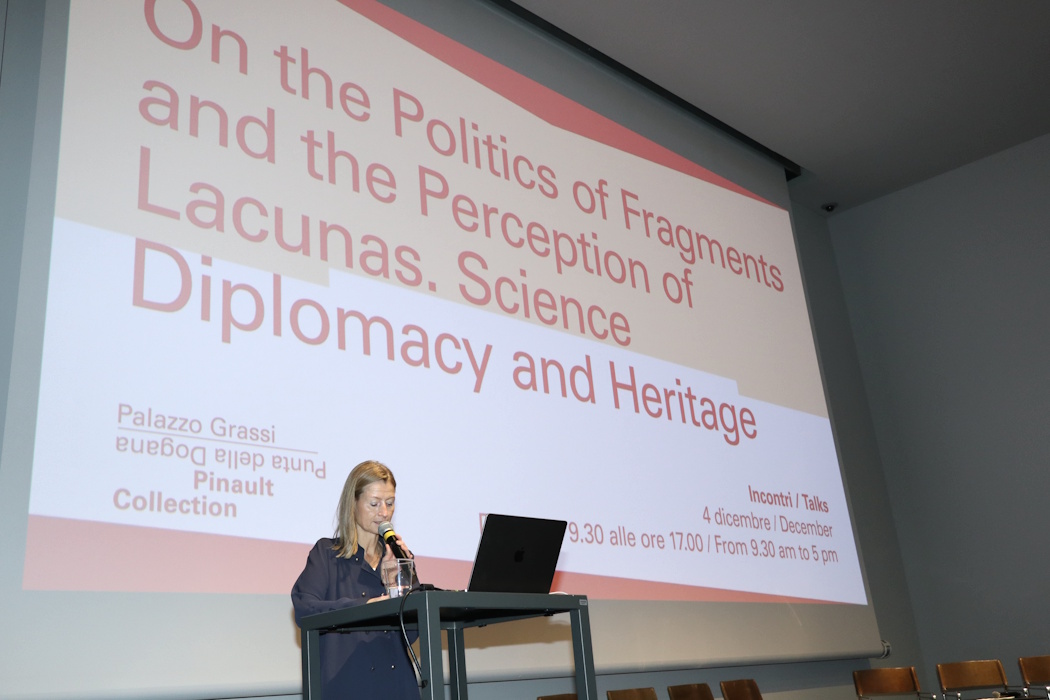
Identifying interfaces, discussing approaches to cultural heritage from the triangular perspective of diplomacy, science, and culture, and highlighting the contribution of artistic practice to expanding our thinking about cultural engagement were the aims of the conference “Science Diplomacy and Heritage: On the Politics of Fragments, the Role of Science, and the Perception of Lacunas,” held on December 4 at the Palazzo Grassi in Venice. Christina Hainzl, Head of the Research Lab Democracy and Society in Transition, welcomed participants on behalf of the University for Continuing Education Krems.
Staying with the Fragments
Focusing on the monument as a testimony to cultural heritage and on the restitution of cultural property as key points of intersection between the three spheres, the keynote “Staying with the Fragments” by Dan Hicks took center stage. Hicks, Professor of Archaeology at the University of Oxford and Curator at the Pitt Rivers Museum, became widely known through his 2020 book The Brutish Museums.
In his keynote, he traced the genealogy of a previously unnamed cultural-political movement that emerged between 1870 and 1920 and shaped museums, monuments, architecture, and cultures of remembrance. Hicks describes this movement as “militarist realism”—an aesthetic-political system that embedded colonial domination through images, objects, and scientific categories.
Hicks showed how contemporary movements—restitution and the decolonization of bodies of knowledge—expose this historical structure. The removal of the Colston statue in Bristol, for example, is not an isolated event but “part of a long process of societal negotiation” aimed at reshaping public memory. Edward Colston was a British politician and slave trader in the 17th century.
Positioning his work at the intersection of archaeology, anthropology, art, architecture, and material culture, Hicks criticized attempts by some institutions to neutralize such conflicts—for example, by conservationally stabilizing toppled monuments and re-exhibiting them. This, he argued, perpetuates the effects of colonial narratives. Instead, new ways of dealing with voids are needed: “Keeping the gap open creates space for other memories.”
The handling of human remains in museums also urgently requires reform. A lack of transparency regarding provenance and storage, Hicks emphasized, is a major obstacle to trust and scholarly integrity
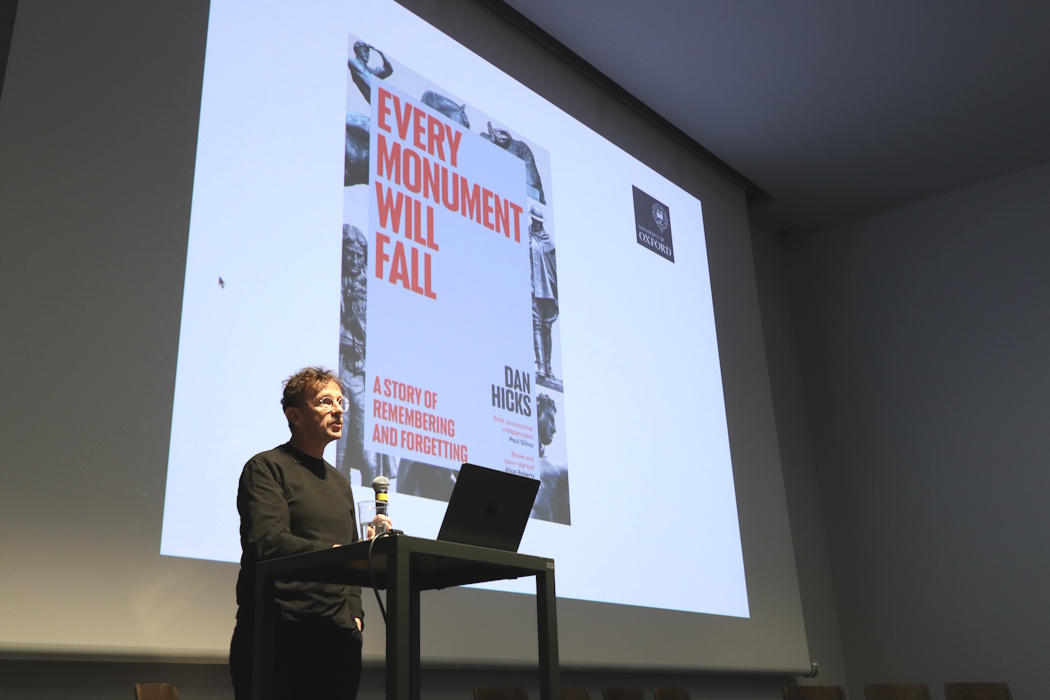
Dan Hicks, Professor of Archaeology at the University of Oxford, traced in his keynote the genealogy of a previously unnamed cultural-political movement that emerged between 1870 and 1920 and shaped museums, monuments, architecture, and cultures of remembrance. Hicks became widely known through his book The Brutish Museums, in which he discusses the largely unquestioned colonial legacy of the British Museum.
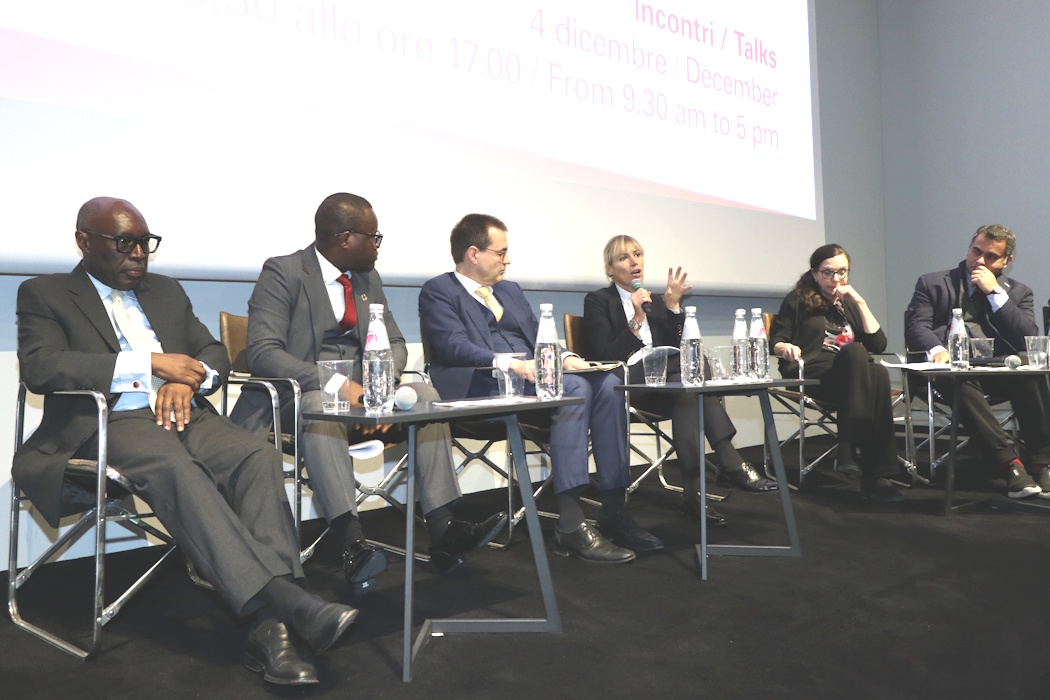
The first high-profile panel discussion examined the close relationship between politics and cultural heritage. The panelists were (from left to right) Alessandro Garbellini, Italian Foreign Ministry, Director for Multilateral Cooperation (not pictured); Ivor Agyeman Duah, Director Manhiya Palace Museum, Ghana, Samuel Partey, UNESCO Venice; Volker Erhard, German Foreign Office, Head of the Cultural Heritage Department; Katalin Andreides, lawyer, Rome; Regina Rusz, Ambassador, Austrian Foreign Ministry, Director General for Cultural Affairs; and Muhammad Adeel, Embassy of Pakistan to the European Union, Belgium, and Luxembourg.
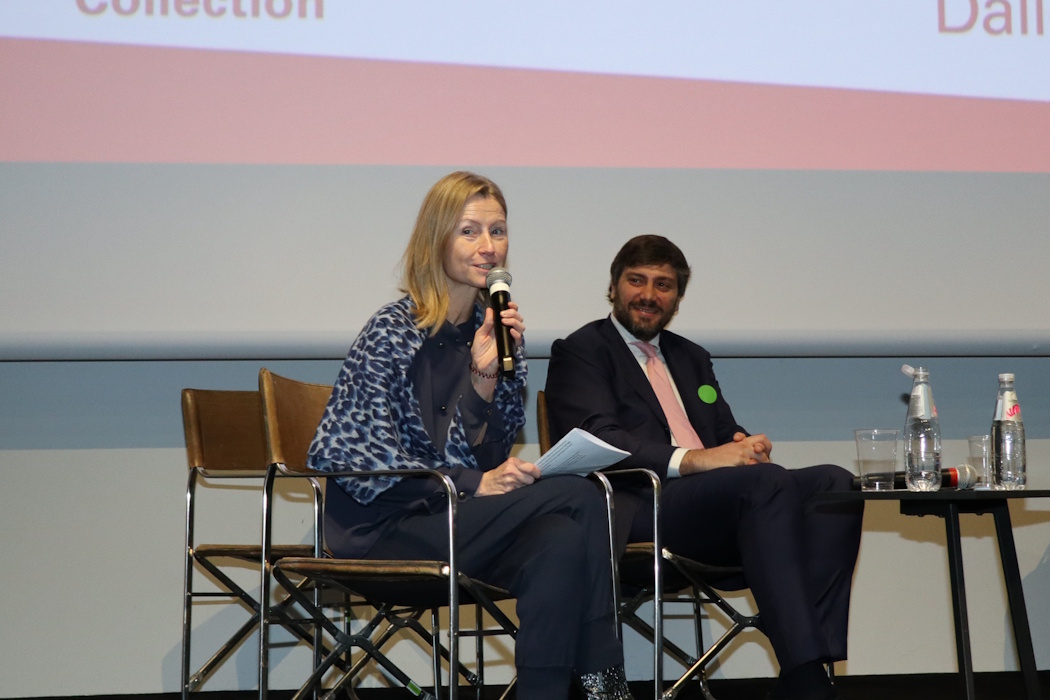
Christina Hainzl, University for Continuing Education Krems and co-organizer of the conference (pictured left next to Alessandro Garbellini, Italian Ministry of Foreign Affairs), moderated the panel together with co-organizer Eric Piaget from the EUTOPIA university alliance.
Culture as a strong diplomatic force
The first panel, moderated by Christina Hainzl and Eric Piaget from the EUTOPIA university alliance, examined how closely political relationships are linked to the treatment of cultural heritage. Panelists included Regina Rusz, Ambassador, Austrian Federal Ministry for European and International Affairs, Director General for Cultural Affairs; Alessandro Garbellini, Italian Ministry of Foreign Affairs, Director for Multilateral Cooperation; Volker Erhard, German Federal Foreign Office, Head of the Cultural Heritage Division; Katalin Andreides, attorney, Rome; Ivor Agyeman-Duah, Manhiya Palace Museum, Ghana; Samuel Partey, UNESCO Venice; and Muhammad Adeel, Embassy of Pakistan to the European Union, Belgium and Luxembourg. There was broad agreement that cultural and science diplomacy can no longer be understood as instruments of asymmetric influence.
Regina Rusz spoke of the “power of relationships,” which should replace classical notions of soft power. Diplomacy, she argued, should enable empathy and dialogue rather than claim interpretive authority. Volker Erhard of the German Federal Foreign Office emphasized that authoritarian regimes continue to rely on “subordinating soft power,” while European states are increasingly pursuing partnership-based models.
From an African perspective, Ivor Agyeman-Duah, Director of the Manhiya Palace Museum in Ghana and one of the negotiators involved in the restitution of the Asante treasures, pointed to the historical entanglement of scientific practices with colonial interventions. Scientific knowledge had enabled progress but had also caused “cultural pain,” for example through resource exploitation and destructive environmental practices.
UNESCO representative Samuel Partey explained how scientific risk models—such as those addressing flooding or erosion—now support diplomatic processes in the protection of cultural heritage: “Science creates shared arguments for preserving sites.”
Attorney Katalin Andreides highlighted that global approaches to provenance research and restitution are undergoing significant change. More inclusive forms of cooperation are necessary so that knowledge and cultural expressions are no longer anchored primarily in the Global North.
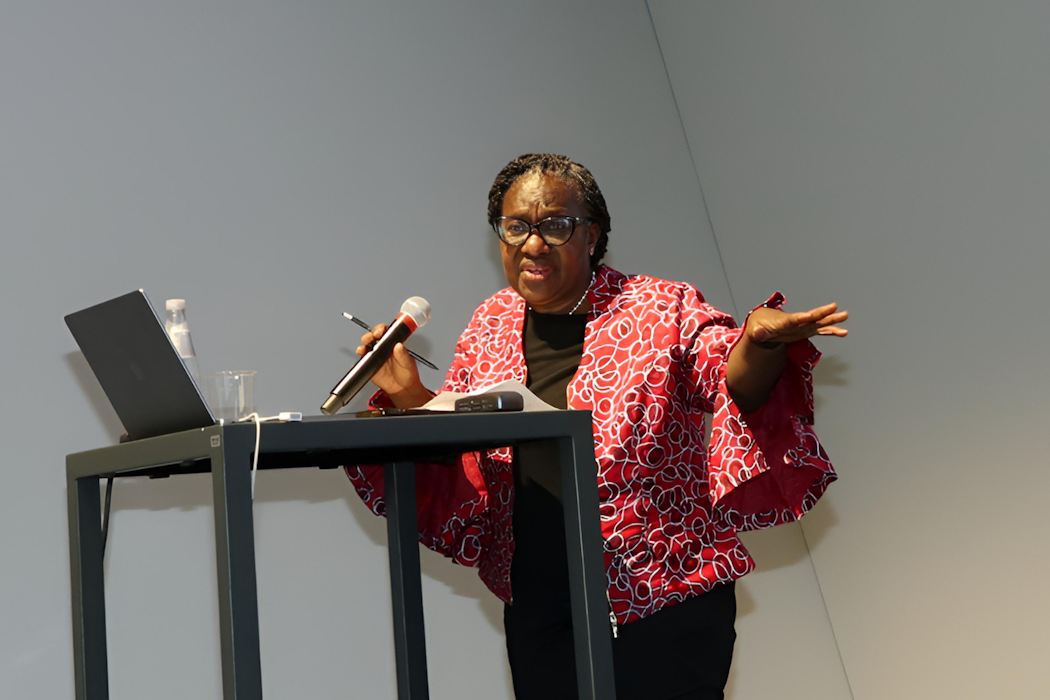
The afternoon program began with the keynote “Science diplomacy and heritage: bridging wisdom and innovation” by Peggy Oti-Boateng, until recently Secretary-General of the African Academy of Sciences in Nairobi.
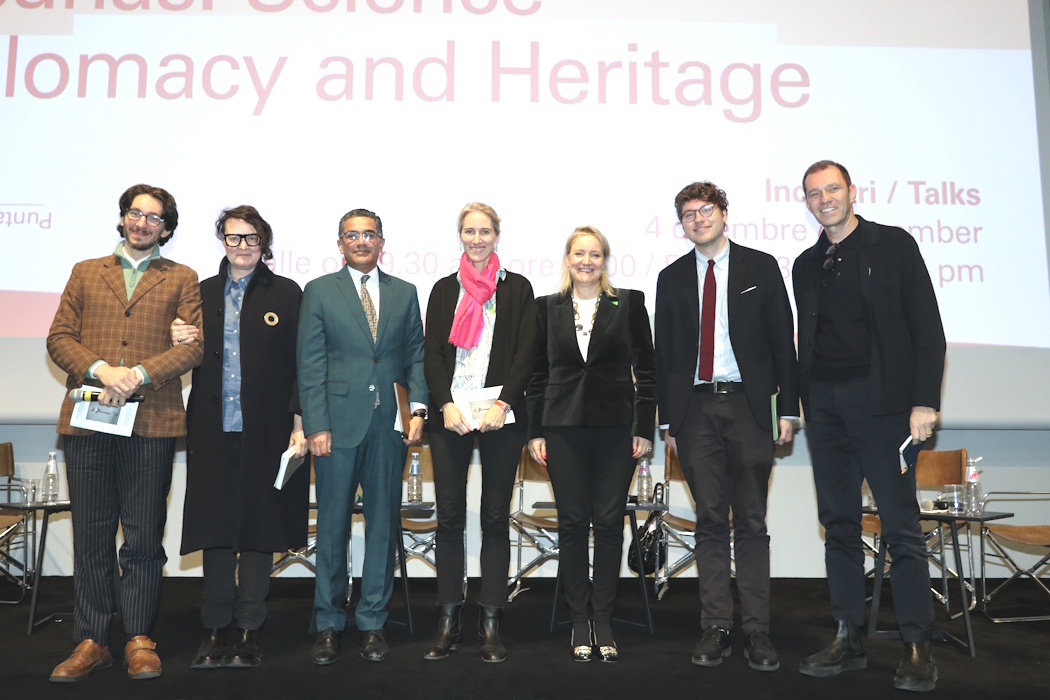
The afternoon panel discussed key challenges for the protection of cultural heritage in times of global crisis. (From left to right): Benjamin W.L. Dehry, co-moderator, Francesca Tarocco, Centre for Environmental Humanities NICHE, Ca’ Foscari Venice, Abdelrazek Elnaggar, EUTOPIA, Nadia von Maltzahn, Orient Institute Beirut, Martina Schubert, Deputy Director, Diplomatic Academy of Austria, Eric Piaget, co-moderator, and Cengiz Günay, Director of the Austrian Institute for International Affairs.
Connecting wisdom and innovation
The afternoon program began with the keynote “Science diplomacy and heritage: bridging wisdom and innovation” by Peggy Oti-Boateng, until recently Secretary-General of the African Academy of Sciences in Nairobi. Drawing on several examples from African countries, Oti-Boateng outlined how cultures can be connected through shared scientific progress and the role played by the traditional African philosophy of Ubuntu, based on the principle “I am because we are.”
Cultural heritage in an era of uncertainty
In the second afternoon panel, moderated by Eric Piaget and Benjamin Dehry, key challenges for protecting cultural heritage under conditions of global crisis were discussed. Participants included Martina Schubert, Deputy Director of the Diplomatic Academy of Austria; Abdelrazek Elnaggar, EUTOPIA; Nadia von Maltzahn, Orient-Institut Beirut; Francesca Tarocco, Centre for Environmental Humanities NICHE, Ca’ Foscari University of Venice; and Cengiz Günay, Director of the Austrian Institute for International Affairs.
The contributions emphasized that science diplomacy can only be effective if conceived as long-term, institutionally embedded cooperation. Panelists from diplomacy, research, and heritage studies stressed that sustainability is a process that must link scientific evidence, social needs, and historical sensitivities. Particular emphasis was placed on the importance of trust, equitable knowledge distribution, and early-established channels of dialogue that can serve as stable infrastructure in times of crisis.
The discussions made clear that preserving heavily frequented heritage sites—Venice being a prime example—cannot be achieved without linking science, politics, and local experience. Speakers pointed to the limits of purely technocratic solutions and argued for broader bio-cultural approaches that consider humans and the environment together. At the same time, deficits in political governance and social inertia were highlighted: despite the availability of scientific knowledge, consistent implementation is often lacking. In addressing mass tourism and climate risks, the need for interdisciplinary cooperation and sustainable governance structures was therefore emphasized.
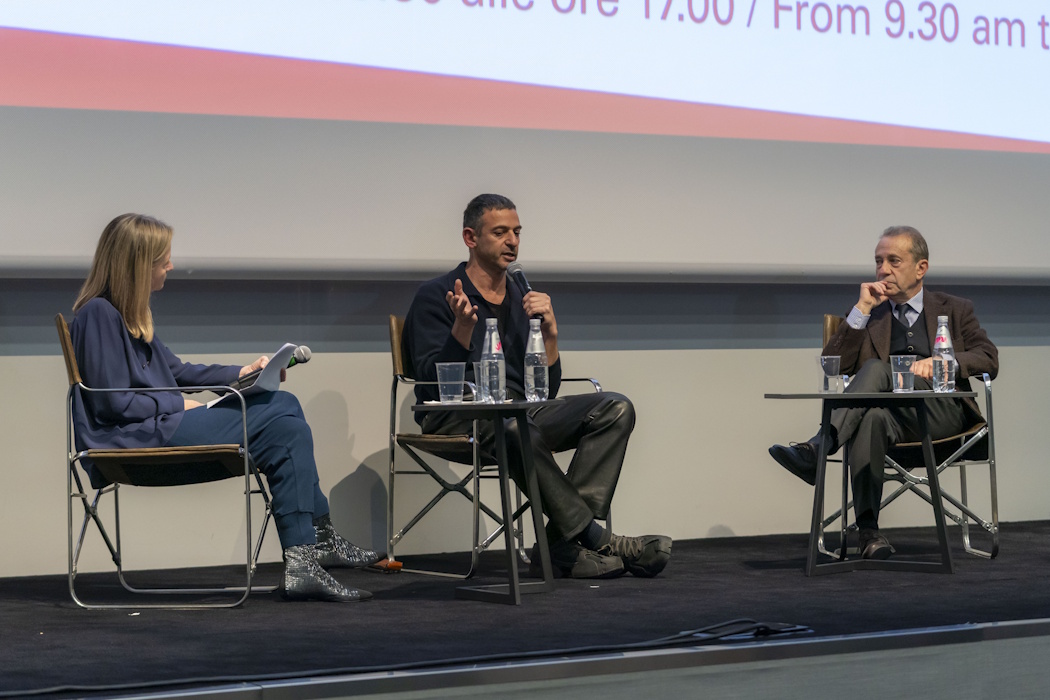
Bruno Racine, Director and CEO of Palazzo Grassi-Punta della Dogana (picture right), discussed how art can challenge institutional knowledge systems in an Artist Talk moderated by Christina Hainzl with internationally renowned artist Ali Cherri.
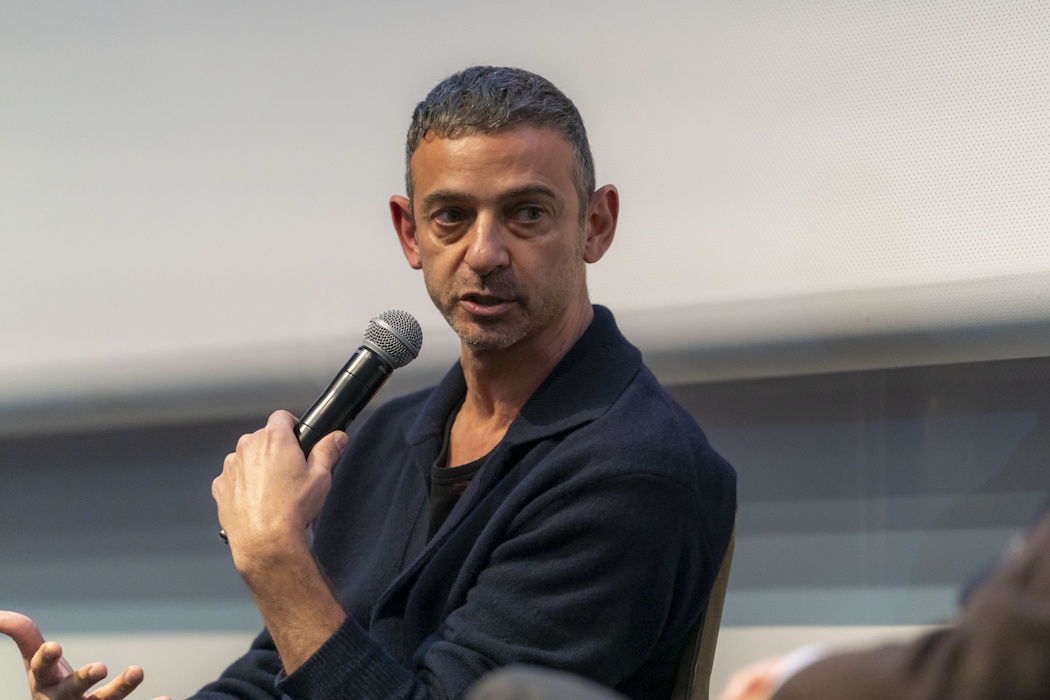
Ali Cherri criticized the “gatekeeper structures” of many museums: curators, historians, and institutions often rigidly determine which stories objects are allowed to tell.
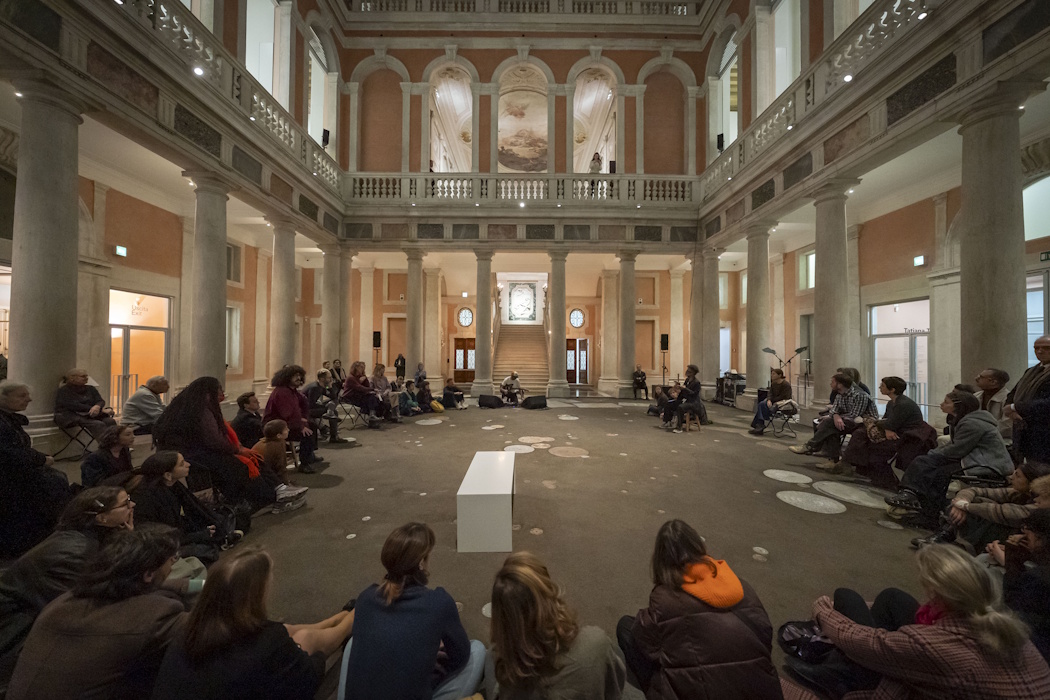
The conference concluded and culminated with Ali Cherri's performance “The Book of Mud” in the atrium of Palazzo Grassi, featuring artists Charbel Haber, Jamika Ajalon, and Souhaib Ayoub.
What objects are allowed to tell
In the concluding artist talk, Bruno Racine, Director and CEO of Palazzo Grassi–Punta della Dogana, and the internationally recognized artist Ali Cherri explored how art can challenge institutional orders of knowledge. Moderated by Christina Hainzl, the discussion addressed the role of innovation, power, and narrative in cultural institutions.
Drawing on the digitization of the collections of the French National Library—which he led from 2007 to 2013—Racine illustrated the immense importance of technological innovation for diplomacy and access to cultural heritage. Digitized newspapers, manuscripts, and image collections can be used as “tools of knowledge exchange,” for example when cultural heritage in crisis regions has been destroyed and digital copies can contribute to reconstruction. He also spoke of diplomatic experiences with China and Korea, where historical objects became sensitive points of negotiation: while China emphasized high-quality digitization, Korea insisted on symbolic restitution—an example showing that technical and scientific solutions alone do not always meet cultural needs.
Ali Cherri built on these points and criticized the “gatekeeper structures” of many museums, where conservators, historians, and institutions often rigidly determine which stories objects are allowed to tell. In his view, many museums today primarily display their systems of knowledge production rather than the objects themselves. The invitation of contemporary artists is often a symptom of institutional uncertainty when problematic collections lose their legitimacy.
Cherri argued for enabling objects to enter into different kinds of relationships, beyond curatorially constructed narratives: “Museums should create conditions in which new stories can emerge, rather than only telling their own story.”
The Book of Mud
The conference concluded with the performance “The Book of Mud” by Ali Cherri in the atrium of the Palazzo Grassi, featuring the artists Charbel Haber, Jamika Ajalon, and Souhaib Ayoub.
“The Book of Mud” takes mud as its point of departure for a journey through various narratives dealing with swamps, standing bodies of water, and lowlands. This symbolic choice allows for an exploration of the many dimensions of earth and water—both physical and metaphorical—and demonstrates how these elements interact to shape our understanding of the world and of human existence itself.
The conference was made possible through the support of a number of renowned institutions, foremost Palazzo Grassi–Punta della Dogana for providing the venue and infrastructure and for hosting the event, as well as the European Union Science Diplomacy Alliance, the Institute for the Danube Region and Central Europe, and the UNESCO Regional Bureau for Science and Culture in Europe, based in Venice.
Contact




Tags

