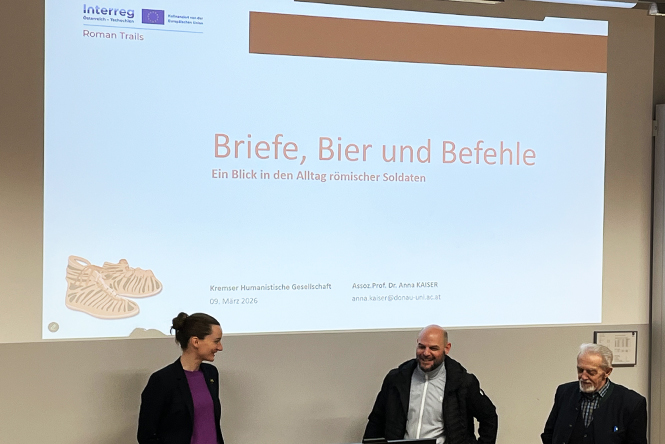
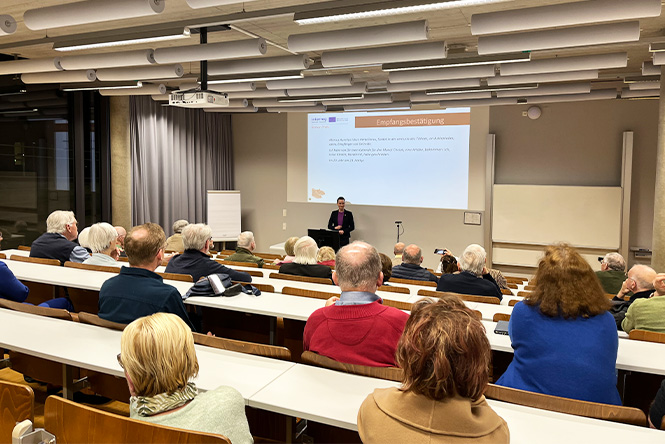
On 9 March, the Kremser Humanistische Gesellschaft invited the public to an engaging lecture at Campus Krems. Under the title “Letters, Beer and Orders – A Glimpse into the Everyday Life of Roman Soldiers", Assoz. Prof. Dr. Anna Kaiser offered new perspectives on those facets of Roman military life that often remain hidden behind the strict structures of military organisation: routines, concerns, practical challenges, and personal voices from ancient daily life. The topic also tied into current research and outreach initiatives of the Interreg project Roman Trails, establishing a direct connection to the region’s frontier history.
A Look into the Roman Frontier World
In the context of Roman Trails – a project that highlights Roman history on both sides of the Danube in Austria and the Czech Republic – the lecture focused on aspects of military life that written sources reveal only rarely. Particular attention was given to the personal experiences and everyday challenges of soldiers stationed along the limes.
Anna Kaiser began by introducing the various forms that the Roman frontier (limes/ripa) could take across the Empire, demonstrating how profoundly both the landscape and local social structures shaped the appearance and organisation of these border zones.
She then explained the organisation of a Roman legion – from its division into cohorts, maniples and centuries to the responsibilities of key officers such as the legatus legionis and the praefectus castrorum. Considerable attention was also given to service conditions: legionaries had to be Roman citizens and served for twenty years, while auxiliary soldiers received citizenship only after completing twenty-five years of service.
Everyday Life in Letters, Requests and Orders
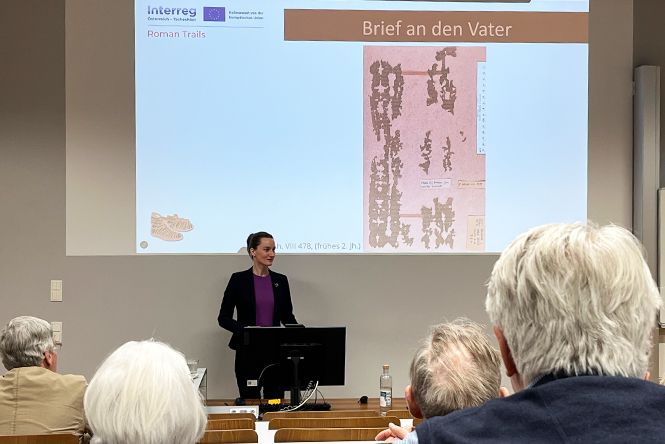
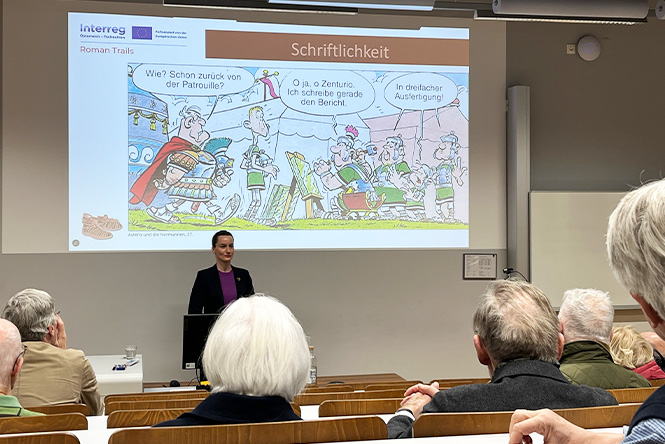
A particular focus of the lecture lay on written sources that offer strikingly personal insights into life along the frontier. Anna Kaiser presented inscribed objects and documents from the Roman Imperial period, including the Vindolanda tablets found near Hadrian’s Wall, most of which date to the early second century AD. They provide detailed information on food supply, duty schedules and transport organisation – as well as on illness, emotions, private invitations and the mobility of troops.
Equipment and Material Culture
The lecture concluded with an illuminating look at the material culture of the Roman military. The spectrum ranged from the gladius to helmets and shields, as well as rank insignia used by officers. The almost 50‑kilogram marching pack was also presented, vividly illustrating the physical demands placed on soldiers during their service.
Relevance for the Region
For Lower Austria and South Moravia, the core regions of the Roman Trails project, this topic holds particular significance.
The lecture clearly demonstrated how written sources complement archaeological findings and how essential interdisciplinary approaches are for understanding the societies of the Roman frontier.
A lively discussion concluded the evening and highlighted the strong interest in the region’s Roman history.

Roman Trails
The project focuses on the creation of a common, cross-border thematic region of the areas of South Moravia and the northern part of Lower Austria (Weinviertel), based on the - little known - Roman history north of the Danube and the establishment of interactive (long-distance) hiking and cycling trails along the traces of the Roman history.





Tags

