
-

Graduation
Certificate
-

ECTS-Points
6
-

Learning format
-

Duration
3 days, part time
-

Costs
980€ @ 6 ECTS or 1440€ @ 9 ECTS
-

Language
English
-


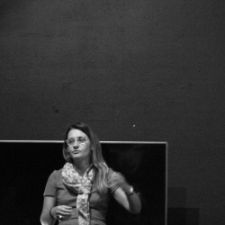
Can we use photography as a method of thinking—so that the image itself is the result of analysis, reflection, and research, rather than a mere illustration of words?
Dr. Ana Peraica
Stack Lead – external lecturer at Department for Arts and Cultural Studies
Who is this program for?
This studio is for people who want to think visually and let images do complex work. If you feel that some ideas cannot be captured in text alone, or that your most precise thoughts appear as visual arrangements, sequences, or comparisons, this program is for you.
Artists and photographers, designers, curators, archivists, visual researchers, scholars in the humanities and social sciences, and anyone who wants to develop photography as their primary analytical medium—not just a way to document what they already know.
When are the next dates?
Dates to be announced. Photography and Critical Studies is delivered as recorded lectures, available to work through at your own pace. Analysing Photographic Media and Techniques runs as scheduled live online sessions.
-

for working professionals
-

small class sizes
-

specializations
Content
Image Forensics Lab
Photography and Critical Studies — Analysing Photographic Media and Techniques This Krems Culture Stack provides an in-depth account of how photographic meaning is produced and how photographic technologies produce knowledge. It covers the interpretative traditions through which photography has been read across the humanities and then follows the photographic image out of the single frame and into the expanded technical field — from photomontage to algorithmic and generative imaging. The emphasis throughout is that photography does not only record: it constructs.
-
Contents
This collaborative lab environment offers students the invaluable opportunity to immerse themselves in an intensive active learning environment that encourages collaboration. Students work in teams to tackle practical challenges in Arts & Culture under the mentorship of experienced practitioners in dynamic environments. The course emphasizes the development of collaboration and strategy development skills, which are essential in interdisciplinary teams, community arts projects, and roles that require adaptation to diverse perspectives and societal needs. Through hands-on projects and real-world scenarios, students will learn to reflect on teamwork effectiveness and utilize the strengths of each individual member. They will also develop and evaluate strategies that enable the effective integration of Arts & Culture within various sectors, including academia, creative industries, and broader society.
What you’ll do
Participants will treat photography as a method: a way to produce insights, not just to illustrate them. You will explore how framing, repetition, sequencing, montage, juxtaposition, cropping, technical choice, and context can function as forms of reasoning.
Throughout the lab, you will build visual “arguments” where the outcome is photographic: a series, a grid, a visual map, a comparative study, a visual archive, or another image-based structure. Text, when used, serves the images—not the other way around.
- Photography and Critical Studies (recorded)
Learning to think through photographs.
This course introduces multiple photographic discourses—art history, sociology, anthropology, media studies, gender and diversity studies, digital humanities—but always with one central question: How can each of these become a way of working photographically?
You will explore:
- Art historical approaches as methods for constructing image series: iconographic echoes, visual motifs, and timelines built purely from photographs.
- Sociological perspectives as ways of creating photographic “fieldwork”: observing audiences, institutions, spaces, and behaviors through visual typologies and repeated visits.
- Ethnological/anthropological practices as visual methods: using photographs as tools to observe, compare, and map practices over time and across contexts.
- Media studies approaches as experiments with error and disruption: letting glitches, distortions, and failures become part of your photographic reasoning.
- Gender and diversity studies as ways to consciously re-stage, invert, or counter visual norms through constructed photographic situations and casting.
- Digital humanities perspectives that will be translated into visual methods: grids, visual datasets, image sequences, and comparative panels that function like visual arguments or visual databases.
Each approach is treated as a photographic operation you can perform—so that your analytical outcome is a body of images, a structure, or a visual system, not primarily a written text.
- Analysing Photographic Media and Techniques (live online)
Expanding your toolkit of visual thinking devices.
This course follows photography as it enters the expanded and more complex field: photomontages, 360° images, XR and 3D environments, code-rendered images, deep images, holograms, LIDAR scans, satellite data, virtual worlds, and AI-generated or algorithmic photographs.
You will learn to use these not just as technologies, but as distinct thinking formats:
- photomontage as a way to hold contradictions together
- 360° imagery and XR as methods for situational and spatial description
- 3D, LIDAR, and satellite data as tools for structural and infrastructural thinking
- computational and AI photography as ways to test variations, bias, and alternative scenarios
- games and virtual realities as environments to stage, rehearse, and reframe visual problems.
The focus is always on: What kind of thought becomes possible only in this image form? You will experiment with how different techniques lead to different forms of visual reasoning—and your course results will be images, image sets, or prototypes, not essays.
- Research Practice Project – Photography (individual practice)
Design an image-based research or thinking project.
In this individual project, you develop a photographic research or practice-based inquiry in which the final outcome is visual: a sequence, installation plan, series, visual map, or another image-centered format. After consultation with the course management, you will:
- formulate a research question or theme that must be answered visually
- select or produce photographic material that functions as your primary analytic medium
- design a visual structure (series, typology, grid, comparative atlas, interactive layout, etc.) that shows your reasoning and results
Your “conclusion” is not primarily a text but a photographic thinking object: a set of images that embody, test, and communicate your ideas through their visual form.
Participation Options
Krems Culture Stacks are available at three levels. The tier you choose determines your access, what you receive at the end and the price - but not the quality of the experience.
Observer — €280 for a 6-credit Stack.
Attend the content sessions and receive an attendance statement.
Participant — €580.
Full engagement including lab and workshop sessions, with a statement of active participation.
Crediting — €980.
Assessed work, individual feedback from faculty, and a certificate recording your learning outcomes and grade.
For 3-credit Stacks the fees are €140, €280 and €480. For 9-credit Stacks they are €440, €880 and €1,440. Full details are on each Stack page.
|
Credits |
OBSERVER |
PARTICIPANT Teilnehmer_in |
CREDITING |
| 3 ECTS | €140 | €280 | €480 |
| 6 ECTS | €280 |
€580 |
€980 |
|
9 ECTS |
€440 | €880 | €1,440 |
|
Receives |
Attendance statement |
Active participation statement |
Certificate with learning outcomes & grade |
|
Assessment |
None |
None |
Work demonstrating learning outcomes. Individual faculty feedback provided. |
Benefit from our program
-
For working professionals: The content course is recorded, so the theoretical groundwork can be done at your own pace; the live online sessions are scheduled in a concentrated block that fits alongside full-time work.
-
Small groups: Maximum 20 participants per cohort, enabling individual attention, genuine peer exchange, and lasting professional networks.
-
Specialization: Few programs treat photographic history, critical theory and emerging image technologies (XR, 3D, LIDAR, satellite imaging, generative AI) as one continuous field. This Stack does, and is taught by faculty active in image research.
Stacks Lead & Contact
.jpg "© Daniel Novotny")




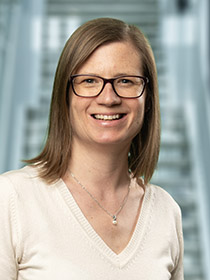
We look forward to your registration and to welcoming you soon at the University for Continuing Education Krems.
About Krems Culture Stacks
Photographic Thinking Lab is part of Innovate & Experiment, one of four categories within Krems Culture Stacks, the microcredential system of the Department for Arts & Cultural Studies at the Universität für Weiterbildung Krems. Credits earned at Crediting tier are stackable toward future Certificate Programs and Master’s programmes at UWK, and are portable to other institutions via standard academic transcript.
→ Back to Innovate & Experiment
→ Back to Krems Culture Stacks — all categories
→ Contact the Department
Tags

