2026
September 2026
- Kick-Off Workshop in Krems
- Postdoctoral researcher Eloisa Harris joins project
March 2026
- Special Issue Workshop, University of Copenhagen
February 2026
- PhD researcher Lina Omran joins the project
January 2026
- Postdoctoral researcher Ahmad Wali Ahmad Yar joins project
2025
September 2025
- Project starts
Refugees’ Political Participation and State-(Re)Making in Displacement (RESTATE) examines how refugees’ experiences with state institutions shape their perceptions of the state and influence their political participation across displacement trajectories. It conceptualises the state not only as a governing authority, but as an institution whose legitimacy and functions are shaped through everyday interactions.
Working outside the legal definition of ‘the refugee’, the project shifts the analytical focus from how refugees are governed to how refugees themselves perceive, interpret, and interact with public authorities in both origin and host contexts. It investigates how encounters with public institutions reshape understandings of authority, legitimacy, and collective engagement. Political participation is understood as an evolving repertoire of collective practices extending beyond electoral politics to include refugee-led governance, everyday negotiation, and strategic withdrawal.
By linking individual experiences with broader institutional structures, RESTATE develops new theoretical insights into how displaced populations contribute to processes of state transformation.
Research Focus
The project addresses four central questions:
- How do different types of interactions with state and non-state actors affect refugees’ perceptions of the state and state-citizen relations?
- How do trust, distrust, and perceptions of procedural fairness influence political participation and non-participation?
- How do processes of politicisation and depoliticisation unfold across displacement trajectories?
In what ways can refugees’ collective engagement contribute to state-(re)makingin origin and host countries?
Research Design
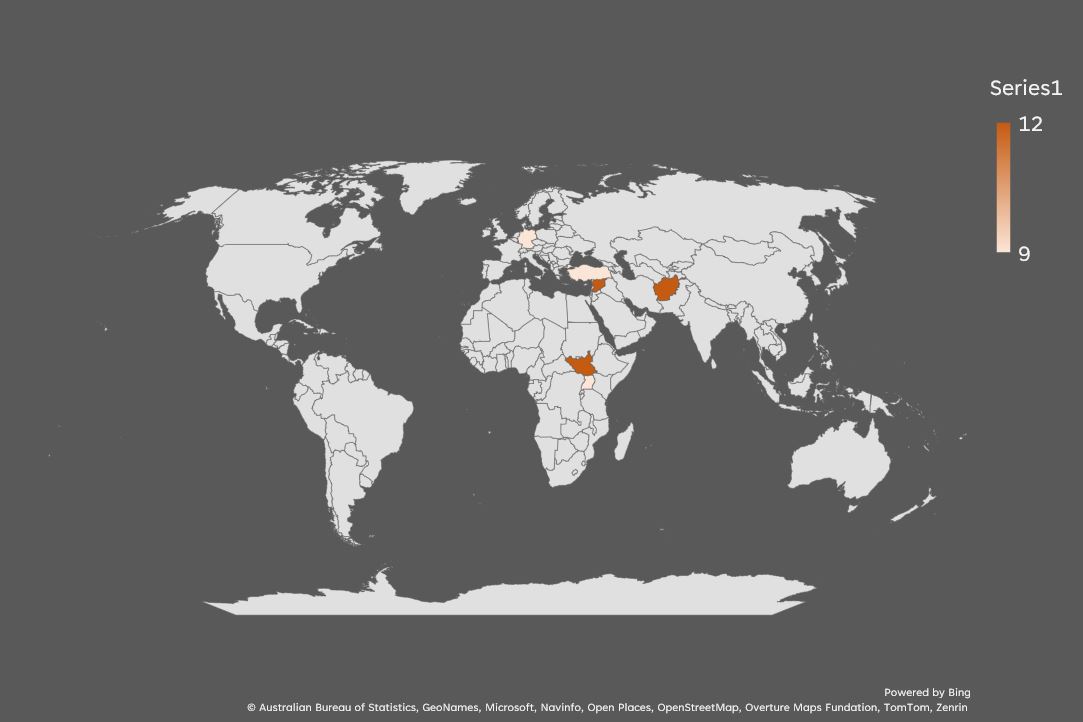
RESTATE employs a comparative mixed-methods and multi-sited approach, studying displacement from three civil-war states (Afghanistan, South Sudan and Syria) in four major host states (Turkey, Uganda, and Germany).
The project includes:
- A cross-national survey in Istanbul (Turkey), Berlin (Germany) and Berlin (Uganda).
- Life history interviews in Istanbul, Berlin, and Berlin (and potentially Teheran online) that reconstruct displacement journeys and trace how perceptions of the state evolve over time.
- Online interviews in Afghanistan, Syria, South Sudan, spanning host and origin contexts to examine how political ideas and experiences travel across borders.
- Analysis of humorous representations of the state as a lens into political perceptions and informal political engagement.
This design enables systematic comparison across different host state contexts and displacement trajectories, while connecting individual level experiences with broader institutional processes.
Key Themes
- Everyday interactions with the state and processes of state-(re)making
- Legitimacy, trust, and procedural fairness
- Political participation and non-participation
- Informal and symbolic political expression
- Displacement trajectories
- Transnational political dynamics
Expected Contribution
RESTATE advances debates on forced migration, political participation, and state transformation. By conceptualising refugees as political actors rather than passive subjects of governance, the project contributes to a deeper understanding of how displacement reshapes both political agency and institutional processes. The findings will inform academic scholarship and broader discussions on governance, conflict, and displacement.
Funding
This project has received funding from the European Research Council (ERC) under the European Union’s Horizon 2020 research and innovation programme (Grant agreement No. 101162100).


