
-

Graduation
Certificate
-

ECTS-Points
6
-

Learning format
-

Duration
3 days, part time
-

Costs
Tiered as Krems Culture Stacks
-

Language
English
-


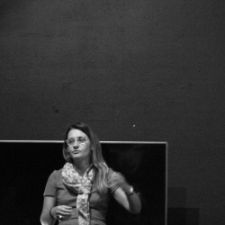
Can we use AI images not as trophies of machine superiority, but as a gym for human perception—turning every “fake” into a workout for your critical eye, your pattern recognition, and your investigative curiosity?
Dr. Ana Peraica
Krems External Faculty
WHO THIS IS FOR
This program is for anyone who loves to observe, doubt, and analyze—but feels lost in the chaos of new image technologies and conflicting “truths.” If you’ve ever zoomed into a photo looking for clues, questioned a viral video, or felt the urge to detect what others scroll past, you belong here. Art historians, journalists, curators, researchers, cultural analysts, media professionals, and armchair detectives—anyone obsessed with evidence, patterns, and visual puzzles will find this lab deeply satisfying.
WHAT YOU WILL DO
Participants are introduced to competing definitions of truth, visual truth, and evidence. You will trace a hidden history of deception: hoaxes, forgeries, photomontages, propaganda images, fake news, deepfakes, AI hoaxes—and the people who exposed them. In the second part, you’ll step into an interdisciplinary toolbox: methods from visual studies, cultural and political analysis, epistemology, and the micro-precision of digital humanities. You’ll learn to read not just what an image shows, but what it hides, who it serves, and how it operates as evidence. In the final section, you become the investigator. You will apply these tools to carefully selected cases—some famous, some obscure, some deceptively ordinary—testing how and where we have lost our ability to “read” images, and how you can rebuild a sharper, more resistant, and more adventurous perception.
|
|
|
|
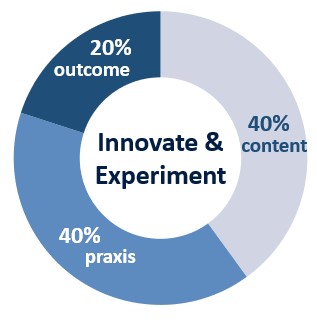
Introduction to image science topics and methods (asychron) – 3 ECTS
Learn to use the tools. This course introduces the core methods of image science and shows you how different disciplines interrogate images: art history, media studies, cultural studies, political science, digital humanities, and more.
You’ll practice concrete techniques used by researchers and investigators: how to trace sources, reconstruct image histories, perform critical literature research, and evaluate conflicting expert claims. By the end, you’ll have a methodological map—and know which tools to reach for when an image feels “off.”
Visual and Digital literacy (live online) – 3 ECTS
Build your conceptual radar. You’ll gain a clear overview of visual cultures, visual perception, and information aesthetics, and learn how images persuade, confuse, and seduce us. This course follows the shifting idea of “truth” in visual media—from early battles between painting and photography to today’s wars over smartphone footage, livestreams, and viral “proof.”
You’ll discover how different theories of truth (correspondence, construction, manipulation, performativity) quietly structure what we accept as “evidence”—and learn to see those structures at work in everyday images.
When, Where & Formats
Times and Locations
|
what |
when |
where |
|
Image Science Topics 1 |
asychronous |
online |
|
Visual & Digital Literacy |
zoom mtg |
online |
|
Image Science Topics 2 |
asychronous |
online |
|
Visual & Digital Literacy |
zoom mtg |
online |
|
Image Science Topics 3 |
asychronous |
online |
|
Visual & Digital Literacy |
zoom mtg |
online |
|
wrap-up & goodbye |
after last mtg |
online |
Image Forensics Lab
-
Contents
This collaborative lab environment offers students the invaluable opportunity to immerse themselves in an intensive active learning environment that encourages collaboration. Students work in teams to tackle practical challenges in Arts & Culture under the mentorship of experienced practitioners in dynamic environments. The course emphasizes the development of collaboration and strategy development skills, which are essential in interdisciplinary teams, community arts projects, and roles that require adaptation to diverse perspectives and societal needs. Through hands-on projects and real-world scenarios, students will learn to reflect on teamwork effectiveness and utilize the strengths of each individual member. They will also develop and evaluate strategies that enable the effective integration of Arts & Culture within various sectors, including academia, creative industries, and broader society.
Participation Options
Krems Culture Stacks are available at three levels. The tier you choose determines your access, what you receive at the end and the price - but not the quality of the experience.
Observer — €280 for a 6-credit Stack.
Attend the content sessions and receive an attendance statement.
Participant — €580.
Full engagement including lab and workshop sessions, with a statement of active participation.
Crediting — €980.
Assessed work, individual feedback from faculty, and a certificate recording your learning outcomes and grade.
For 3-credit Stacks the fees are €140, €280 and €480. For 9-credit Stacks they are €440, €880 and €1,440. Full details are on each Stack page.
|
Credits |
OBSERVER |
PARTICIPANT Teilnehmer_in |
CREDITING |
| 3 ECTS | €140 | €280 | €480 |
| 6 ECTS | €280 |
€580 |
€980 |
|
9 ECTS |
€440 | €880 | €1,440 |
|
Receives |
Attendance statement |
Active participation statement |
Certificate with learning outcomes & grade |
|
Assessment |
None |
None |
Work demonstrating learning outcomes. Individual faculty feedback provided. |
Program Lead & Contact
.jpg "© Daniel Novotny")




Credit Pathways
Where can I stack these credits as an elective or embed into a curriculum?
We are building a Master of Arts in Arts an Cultural Studies. Stay tuned for more information, or sign up to receive more information.

