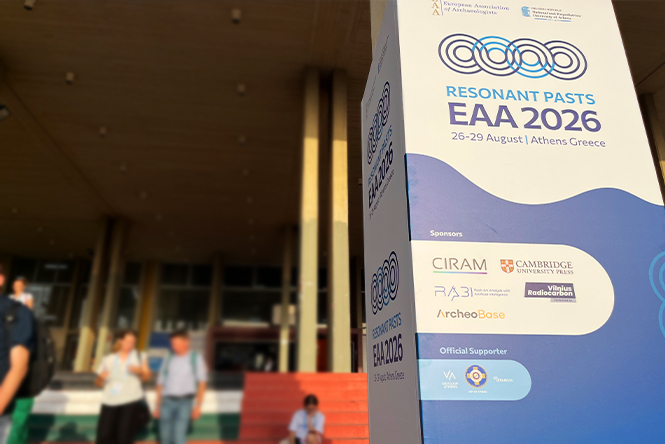
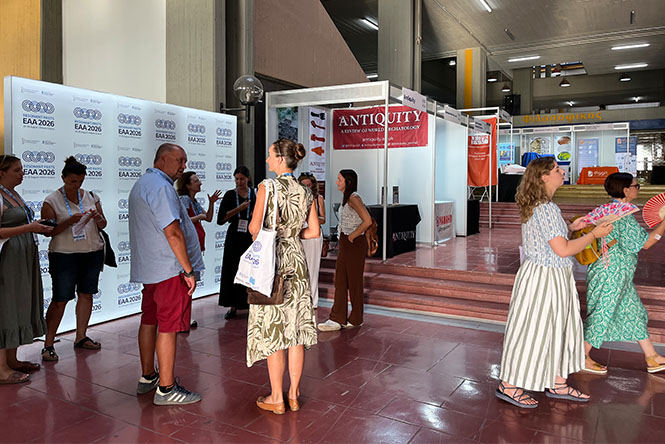
More than 4,000 archaeologists, cultural heritage experts and researchers from around the world gathered in Athens at the end of August for the 32nd Annual Meeting of the European Association of Archaeologists (EAA 2026). The annual conference is one of the most important international professional events in the fields of archaeology and cultural heritage and, in 2026, was held under the theme “Resonant Pasts.”
Representing the Center for Cultural Property Protection, Anna Kaiser and Raffaela Woller attended the conference and presented the Interreg Danube Region project ROMAN LEGACY together with international partners.
How can archaeological research results be communicated in a way that makes them not only visible in academic publications, but also accessible as tangible experiences for visitors?
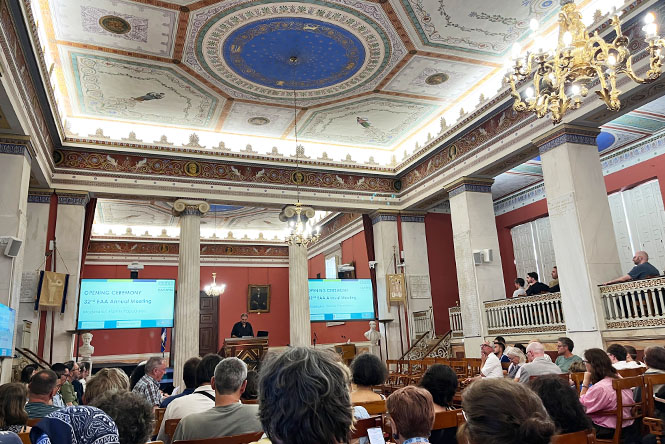
This question was at the heart of the international session 'Transforming Data into Experience: Interdisciplinary Strategies for Sustainable Archaeological Tourism' at EAA 2026. The session was organised by representatives of the Center for Cultural Property Protection, the Archaeological Museum Zagreb, the Hungarian National Museum, and Universalmuseum Joanneum. Bringing together experts from academia, museums, and cultural heritage institutions, it provided a platform to discuss innovative approaches to heritage interpretation, as well as the role of cultural heritage in sustainable regional development and international cooperation.
The session featured contributions from several European countries and highlighted the diversity of current approaches to making archaeological sites and historic landscapes accessible, meaningful, and engaging for visitors. Presentations explored strategies for developing sustainable visitor infrastructure along the Roman heritage corridor of the Danube region, digital and participatory interpretation formats, innovative educational programmes for diverse target groups, and approaches to involving local communities in the use and presentation of archaeological sites. At its core, the session showcased successful examples of how scientific research and archaeological data can be transformed into compelling heritage experiences, visitor programmes, and sustainable tourism concepts.
Taken together, the contributions demonstrated how research can help not only to preserve cultural heritage, but also to bring it to life for wider audiences and embed it sustainably within long-term regional development processes.
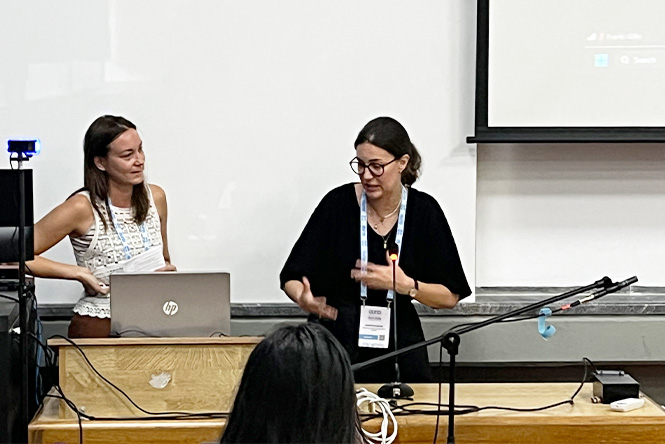
Particular interest was drawn to the presentation by Balázs Komoróczy, Katarína Liščáková, Pavla Růžičková and Marek Vlach from the Institute of Archaeology of the Czech Academy of Sciences, Brno, who explored opportunities for the sustainable tourism development of Roman archaeological landscapes located north of the Middle Danube Limes.Using concrete examples, they demonstrated how archaeological research can be translated into visitor centres, thematic trails and tourism offers. Their presentation also highlighted the role of the ROMAN LEGACY and Roman Trails projects in increasing the visibility and interpretation of these still little-known archaeological landscapes.
In her presentation, 'Science for Everyone: Transforming Academic Knowledge into Public Experience', Szilvia Fábián of the Hungarian National Museum demonstrated how archaeological research, scientific analyses, digital technologies, and creative interpretation methods can work together to make scholarly knowledge accessible to diverse audiences. Drawing on examples from museum practice, she illustrated how interactive exhibitions, digital reconstructions, thematic routes and educational programmes can help translate complex specialist knowledge into attractive cultural heritage experiences while at the same time promoting sustainable cultural tourism.
Another inspiring example of innovative heritage interpretation was presented in the poster 'Playing the Roman Past: Ancient Board Games as Educational and Interpretative Tools' by Ema Kosnica and Jacqueline Balen from the Archaeological Museum in Zagreb. The authors showed how reconstructed ancient board games can be used to familiarise children and young people in particular with everyday life in Roman times. The contribution demonstrated how playful and interactive methods can create new approaches to cultural heritage and sustainably enrich its interpretation.
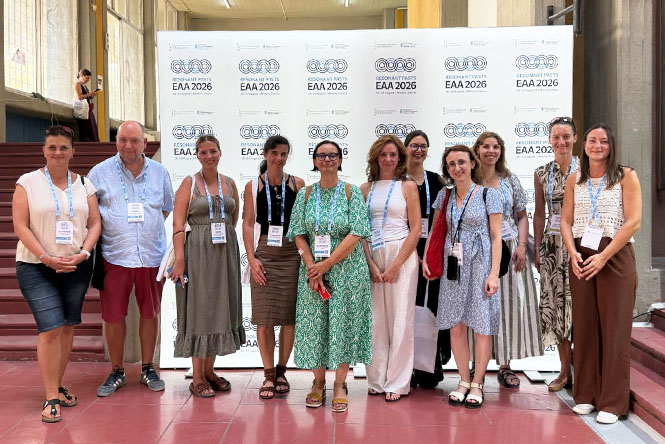
Participation in EAA 2026 provided the ROMAN LEGACY partners with the opportunity to present current project results to an international professional audience, exchange experiences with experts from across Europe, and gain new insights for the sustainable interpretation of Roman cultural heritage in the Danube Region. At the same time, the session organised by the ROMAN LEGACY partnership highlighted the importance of interdisciplinary and cross-border cooperation in making the shared Roman heritage of the Danube Region visible, accessible, and tangible in the long term.
ROMAN LEGACY
The aim of the project is to establish a cultural route as part of a larger thematic region along the Danube Limes, which connects several European countries as a shared European heritage, and to submit this route for certification as a Cultural Route of the Council of Europe.


Tags

