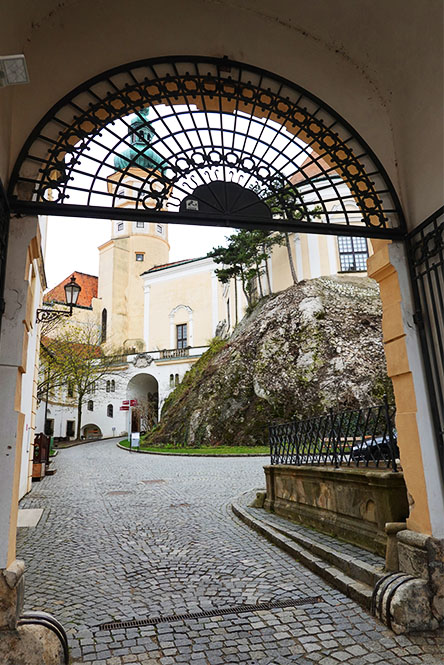
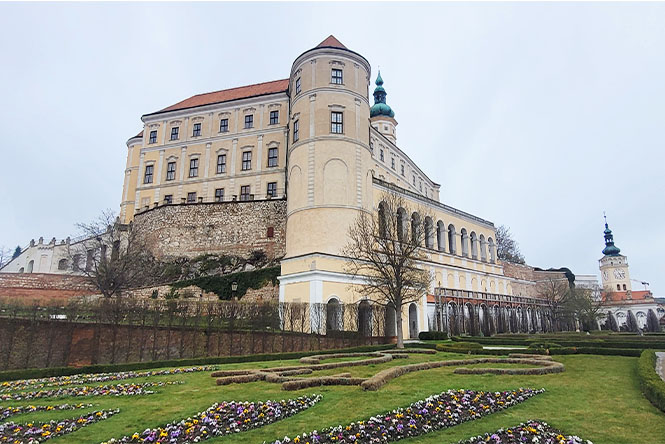
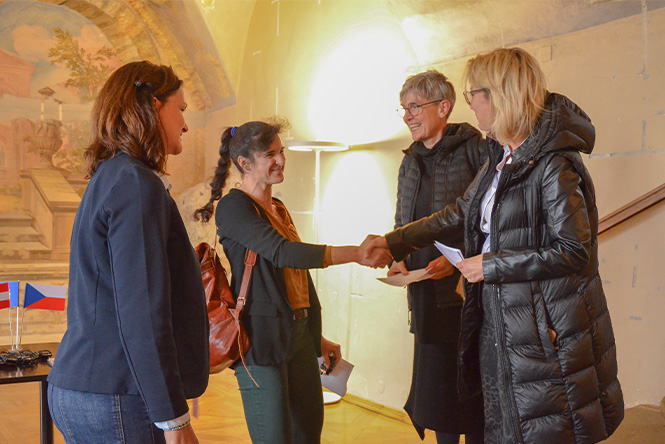
On 26 March 2026, a cross-border expert and networking meeting took place in the historic setting of Mikulov Castle as part of the Roman Trails project. The event brought together project partners as well as experts from archaeology, tourism, and heritage interpretation from Austria and the Czech Republic, providing a key platform for vibrant cross-border exchange and a shared vision of making the region’s Roman heritage newly accessible and engaging.
Organised by the Institute of Archaeology of the Czech Academy of Sciences, Brno (ARUB), in cooperation with the Center for Cultural Property Protection, the meeting aimed not only to present current project results but also to further strengthen cross-border collaboration.
These networking formats are central to Roman Trails, as they bring together diverse perspectives from academia, practice, and regional development, creating space for shared reflection and forward-thinking:
What stories can be told along the Roman traces between the Weinviertel and South Moravia? How can digital technologies make these stories accessible and engaging for different target groups? And how can this lead to the development of tourism offers that are both well-founded and appealing?
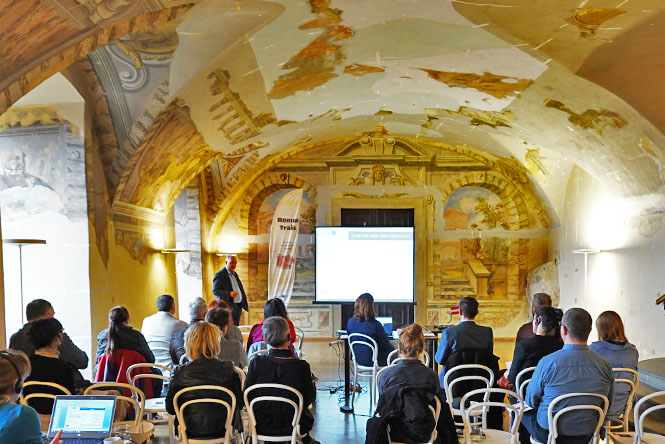
A key contribution was the presentation by Balázs Komoróczy (ARUB), who introduced initial results of a cross-border data survey on the tourism potential of the region’s shared Roman heritage. This analysis provides an essential basis for the further development of visitor offerings.
Building on this, current progress in the field of digitalisation was presented, particularly focusing on how modern technologies can help to convey archaeological content in a vivid, interactive, and accessible way for a broad audience – an area explored in greater detail by Marek Vlach (ARUB).
More about the survey results
go to FactsheetThe presentations became more tangible with the introduction of possible route approaches (Roman Trails):
Six thematic concepts demonstrated how visitors will be able to explore the region along Roman routes in the future – not as a series of individual sites, but as a coherent, cross-border experience.
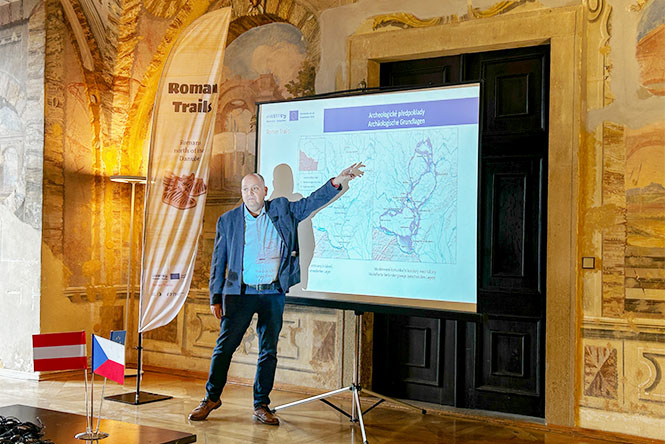
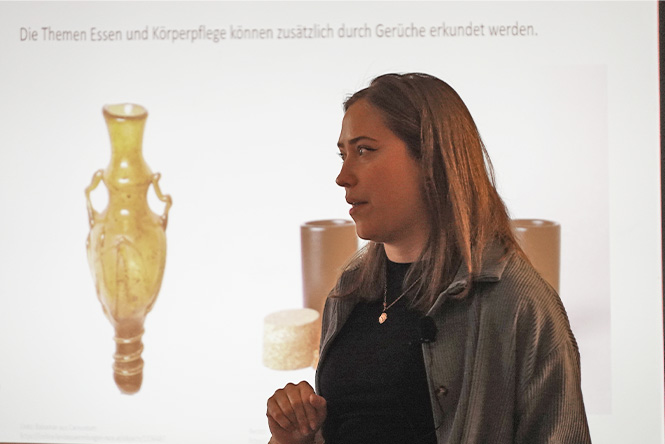
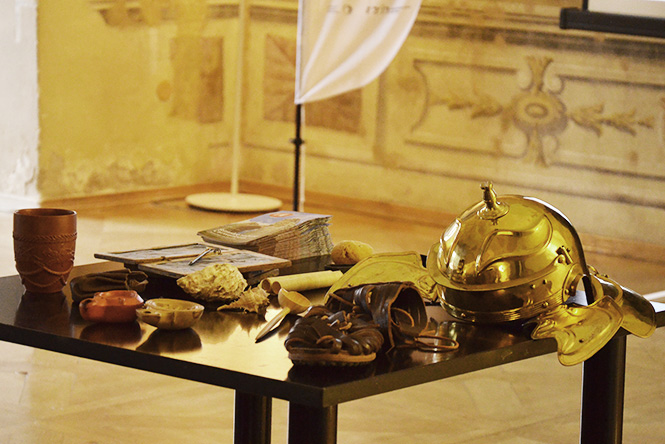
Alongside strategic and conceptual perspectives, the question of how to communicate these contents also came into focus. Pavla Růžičková (ARUB) presented innovative and deliberately low-threshold approaches to Roman-themed events, emphasising clarity, interaction, and experiential engagement. This approach became particularly tangible in the presentation of the pilot event “The Romans Up Close” by Mona Baumgarten (heritage interpreter), which aims to explore new participatory forms of heritage communication and provide visitors with direct, immersive access to history.
The networking meeting in Mikulov thus proved to be far more than a conventional project appointment:
it provided space for exchange, inspiration, and the joint advancement of key project approaches. Through the close collaboration of experts, institutions, and regional stakeholders, the Roman Trails project is laying important foundations for the sustainable valorisation of cultural heritage – with the aim of making it visible, accessible, and engaging for both local communities and visitors in the long term.
Roman Trails
The project focuses on the creation of a common, cross-border thematic region of the areas of South Moravia and the northern part of Lower Austria (Weinviertel), based on the - little known - Roman history north of the Danube and the establishment of interactive (long-distance) hiking and cycling trails along the traces of the Roman history.




Tags

