Background of the Project
Archaeology is a fascinating field of research, not only for academic scholars. In fact, since the very beginnings of the discipline, enthusiastic individuals whom we would today describe as citizen scientists have played a vital role. They not only discovered numerous archaeological sites and artefacts, but in many cases also took the lead in their scientific documentation, analysis, and publication. Within reCLAYm, we want to renew this tradition and invite the public to become part of the research process.
Asparn/Schletz – An Archaeological Assemblage of the State Collections of Lower Austria)
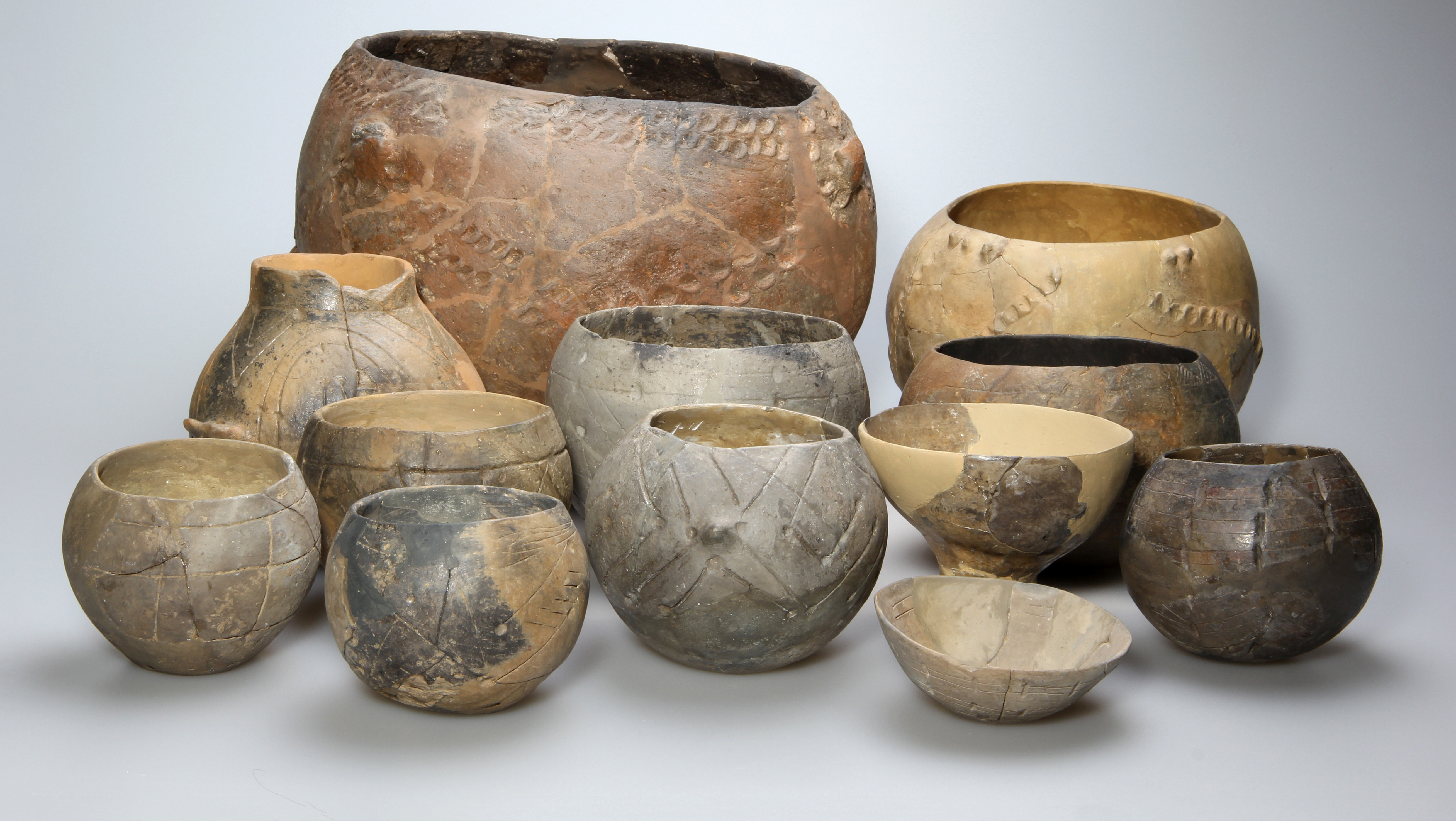
 The reCLAYm project focuses on the pottery finds from the archaeological site of Asparn/Schletz, located in the Weinviertel region of Lower Austria. The site belongs to the Linear Pottery Culture (LBK) and was established around 7,000 years ago during the early development of farming communities in Central Europe.
Between 1983 and 2005, the site was investigated through large-scale archaeological excavations conducted by the State Collections of Lower Austria, resulting in the recovery of an extensive assemblage of archaeological material. The numerous ceramic finds from Asparn/Schletz provide an important basis for research. They enable investigations into chronology, technology, social organization, and cultural interactions both within the settlement and across wider regions.
You are warmly invited to participate as a citizen scientist in our project!
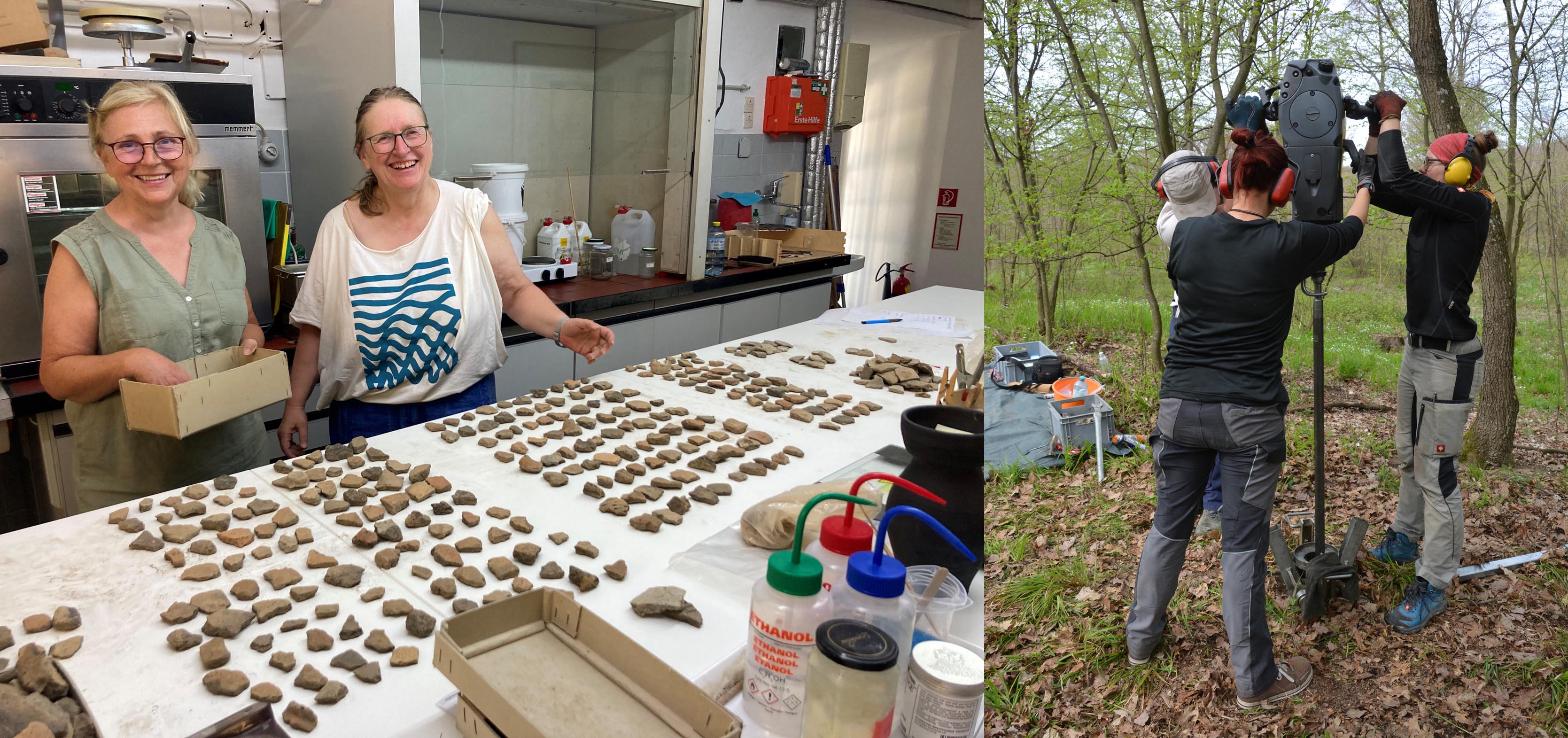
Citizen scientists play an active role in the reCLAYm research project. Following an introduction to the relevant methods and research questions, they work together with the scientific team on specific project questions and gain first-hand insights into a variety of archaeological research activities.
Activities include:
- Documenting and describing pottery finds
- Recording and analysing research data
- Sampling and processing sediment cores
- Participating in laboratory and scientific analyses
- Reconstructing Early Neolithic ceramic vessels
- Discussing and interpreting research results
- Presenting scientific findings at workshops and project events
Here you can find information about the project and register to participate.
You can also subscribe to our newsletter to stay informed about project news and updates.
Research Objectives
The key objective of reCLAYm is the systematic analysis of the rich pottery assemblage from Asparn/Schletz through close collaboration between researchers and citizen scientists. In doing so, the project addresses both archaeological and methodological questions.
- Stylistic and chronological classification of pottery
- Reconstruction of pottery production techniques
- Distinction between locally and non-locally produced pottery
- Identification of local clay sources used for pottery production
- Dating settlement phases and investigating spatial and social dynamics within the settlement of Asparn/Schletz
- Analysis of regional and supra-regional exchange networks
- Creation of a scientific reference dataset for Linear Pottery research in Lower Austria
At the same time, the project examines how citizen scientists can be integrated into archaeological research processes and the scientific analysis of large finds assemblages while ensuring sustainability, scientific quality and meaningful benefits for everyone involved.
Methods Used in the Project
- Documentation and typological analysis of ceramic finds from Asparn/Schletz, Olgersdorf, and Pulkau
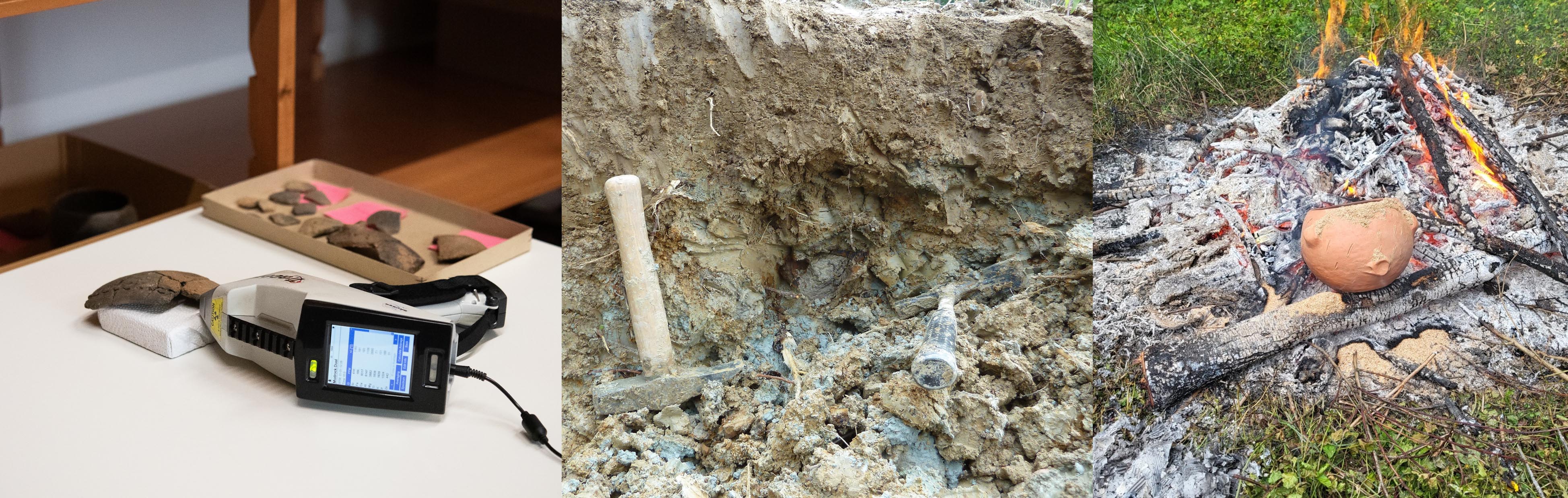
- Collection of sediment cores
- Analysis of ceramic finds, daub, and sediment samples using portable X-ray fluorescence (pXRF)
- Discussion of manufacturing traces on original artefacts and experimental archaeological production of ceramic vessels
Project Members
- University for Continuing Education Krems, Center for Museum Collections Management (Lead)
- Natural History Museum Vienna, Department of Prehistory
- Krahuletz-Gesellschaft Eggenburg
- State Collections of Lower Austria, Department of Prehistory and Historical Archaeology
Cooperation partners
- MAMUZ
- Technical University of Leoben, Chair of General and Analytical Chemistry
- University of Natural Ressources and Life Sciences Vienna, Institute of Soil Research, Campus Tulln
- University of Vienna, Faculty Centre of Archaeology – Prehistoric and Historical Archaeology
- Österreich forscht
Funded by
Gesellschaft für Forschungsförderung Niederösterreich as part of the RTI-Strategy Lower Austria 2027

Details
| Duration | 01/07/2026 - 30/06/2029 |
|---|---|
| Funding | Bundesländer (inkl. deren Stiftungen und Einrichtungen) |
| Program |

|
| Department | |
| Principle investigator for the project (University for Continuing Education Krems) | Mag. Jakob Maurer |