Sustainable entrepreneurship manifests itself in different forms and is not a uniform phenomenon. It looks different in owner-managed small and medium-sized enterprises than in publicly listed corporations, for example. The Center for Corporate Sustainability takes this diversity seriously: we believe that sustainable business can only succeed if we understand companies within their own particular reality – from founding through succession, from sole proprietorships to large enterprises.
That is why we research, in a targeted and context-sensitive way, where business today has its greatest levers and challenges, and translate this knowledge into effective, responsible action through dialogue with business and society. In doing so, we provide orientation for sustainable entrepreneurship that creates long-term value and enables change.
We understand sustainability holistically: economic, ecological, and social aspects are just as relevant to us as the cultural, historical, and psychological dimensions of entrepreneurial action – ranging from societal sustainability discourses to behavioral-economic decision logics to questions of entrepreneurial well-being and long-term performance.
The following goals are of particular focus
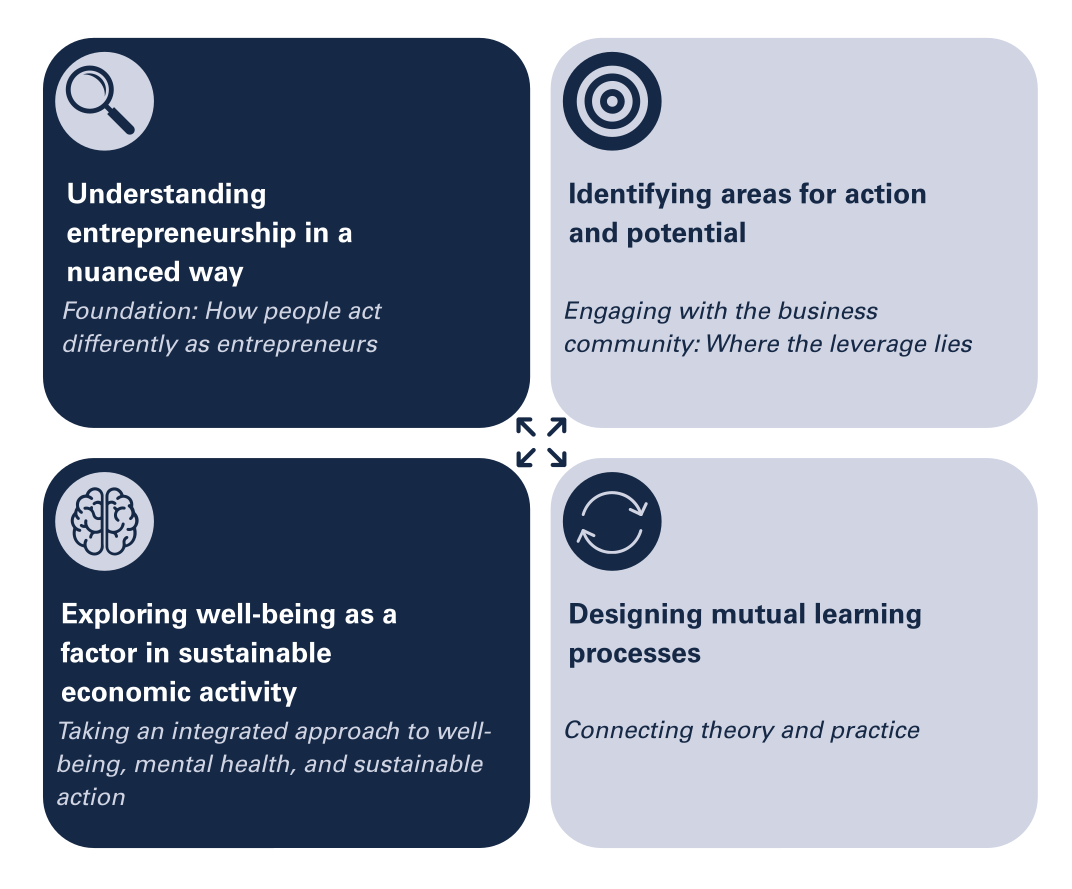
Understanding entrepreneurship in a nuanced way
Foundation: how differently people act and decide as entrepreneurs
What facets, motivations, and life realities shape entrepreneurial action, and how do public and academic discourses reflect this diversity? We systematically examine how people in entrepreneurial roles make decisions and which individual and contextual factors are at play. This produces a context-sensitive understanding of entrepreneurship that does justice to the diversity of business.
Identifying fields of action and potential
In dialogue with business: locating levers, focusing research
Where does business need support to apply its sustainability lever more effectively? Which topics are already available within academia? Which potentials already exist in practice? Through transdisciplinary dialogue with entrepreneurs and their representative bodies, we make these fields visible, systematize and prioritize them, and thereby provide orientation for practice and focus for research.
Researching well-being as a factor in sustainable business
Thinking well-being, mental health, and sustainable action together
How do mental health, experienced strain, and individual well-being influence the way entrepreneurial responsibility is perceived and sustainable decisions are made? We research the interplay between sustainable transformation processes and individual factors such as stress regulation and motivation – particularly among executives and entrepreneurial personalities.
Shaping mutual learning processes for innovation and impact
Connecting science and practice for effective innovation
How do business and academia combine their different perspectives and strengths into solutions with societal impact? We foster structured exchange and transdisciplinary cooperation, anchoring academic work where transformative power arises: in lived business practice.
Our Team
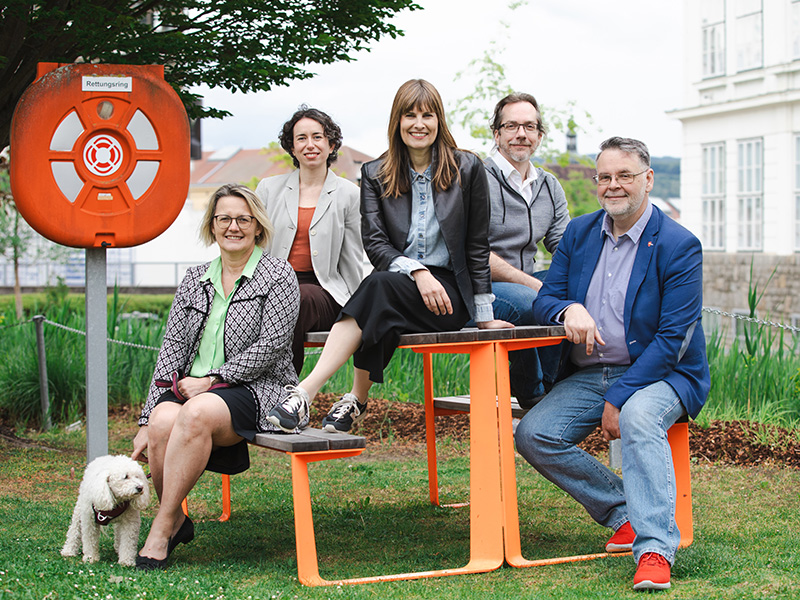
Behind the center is an interdisciplinary team whose composition reflects the complexity of corporate sustainability and thus aims to take into account the holistic perspective that this topic requires.
Tags

